

In mere seconds, Christian Rainer confirmed a long-held suspicion: his grandfather was indeed a member of the Nazi Party.
Rainer, a journalist based in Vienna, Austria, recently entered his grandfather’s name into a newly created online database that enables individuals to search through millions of Nazi Party membership records.
He discovered that Franz Rainer (1886-1961) had joined the Nazi Party on April 21, 1938, just weeks following the annexation of Austria by Germany.
“I was aware of my family’s history in southern Austria, and they were all right-wing, likely anti-Semitic. Some of them still hold those views,” Rainer mentioned to As It Happens host Nil Köksal. “So, I wasn’t shocked.”
Rainer never had the chance to meet his grandfather, who passed away the year before his birth. His father, born in 1922, did not appear in the database.
“That was a genuine relief,” he remarked. “I had not suspected him, but he could have been.”
Mixed Reactions
The search tool was created by the German publication Die Zeit, utilizing millions of membership index cards that were first digitized and made available online by the U.S. National Archives in March.
Prior to this, such information could only be accessed through requests from the U.S. National Archives or the German Federal Archives, with no online availability.
Christian Staas, who leads Die Zeit’s history department, stated that the U.S. archives are challenging to navigate. Additionally, the initial release saw so many users that the site experienced a crash.
“We thought it would be beneficial to create a more user-friendly way for everyone to search these files,” Staas explained in an email to CBC.
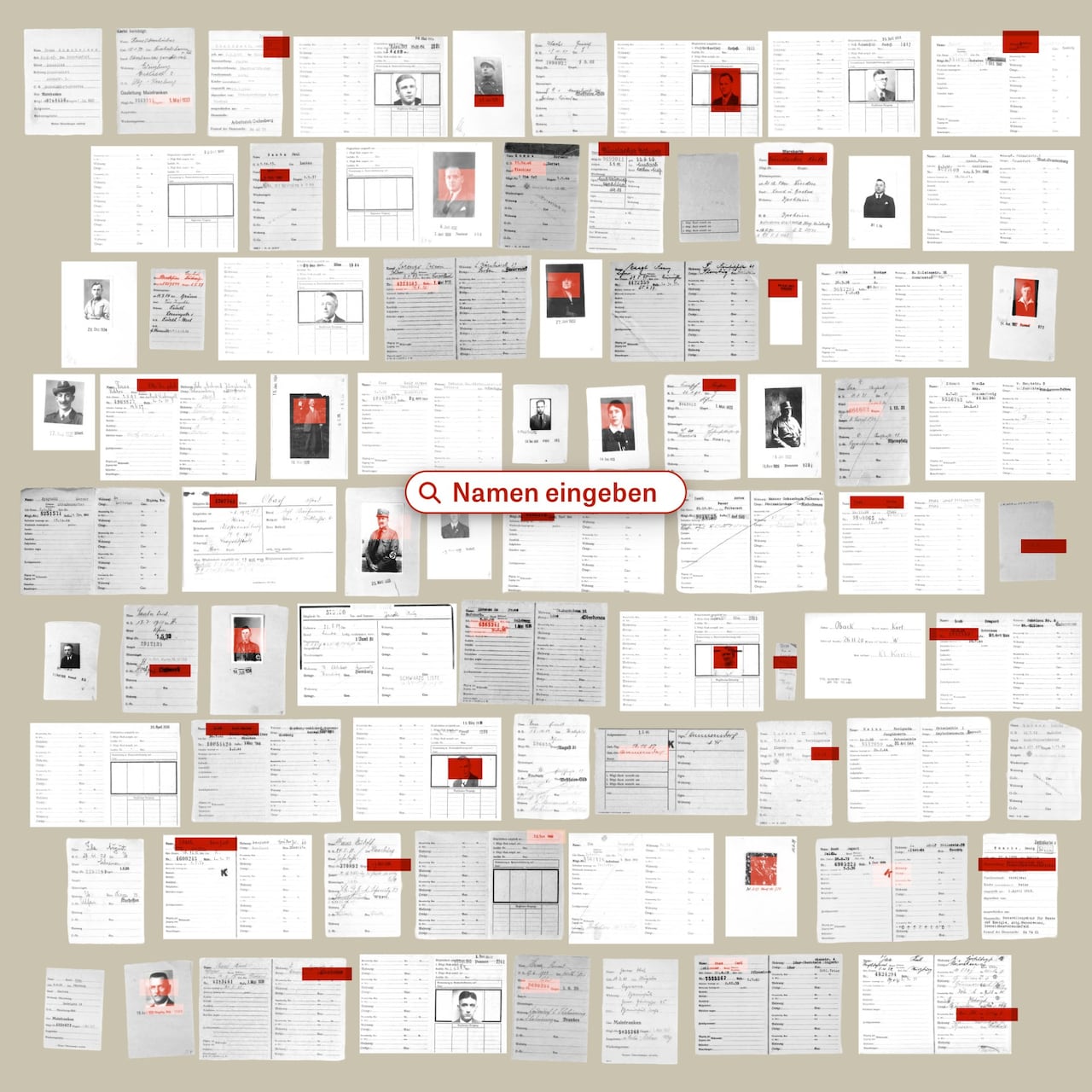
The newspaper Die Zeit developed an online tool for searching millions of Nazi membership cards released by the U.S. National Archives (Die Zeit)
The database is accessible via a paywall, yet anyone can register for a free trial to utilize it. Users can search by name and further refine their search by date of birth, place of birth, or region.
According to the newspaper, millions have accessed the database since its launch in early April, with many sharing their experiences.
“Some users had suspicions about family members being party affiliates and now feel relieved to have confirmation. Others report feeling stunned upon discovering they had been misled about their ancestors,” Staas noted.
“What stands out is that even those with a keen interest in historical matters, including professional historians, confessed they had never thoroughly researched their family history — and that they are now undertaking that exploration.”
-
80 years after the Nazis were tried for war crimes, the documents are online for all to see
-
Netherlands releases list of 425,000 suspected Nazi collaborators online
Die Zeit reports that the database includes 8.2 million names, representing approximately 90 percent of all former Nazi Party members. However, there are still some data gaps, and the publication cautions that certain results, compiled using artificial intelligence, “may be incomplete or contain errors.”
Between 1933 and 1945, the Nazis exterminated six million Jews, in addition to millions of others from persecuted groups during the event now known as the Holocaust.
‘It Could Happen Anywhere’
Rainer urges everyone to utilize the search tool. He pointed out that numerous Nazis relocated during and after World War II to various nations, including the U.S. and Canada.
He emphasized that it is not about assuming guilt or personal accountability for the actions of those who have long since passed, but rather about uncovering the truth.
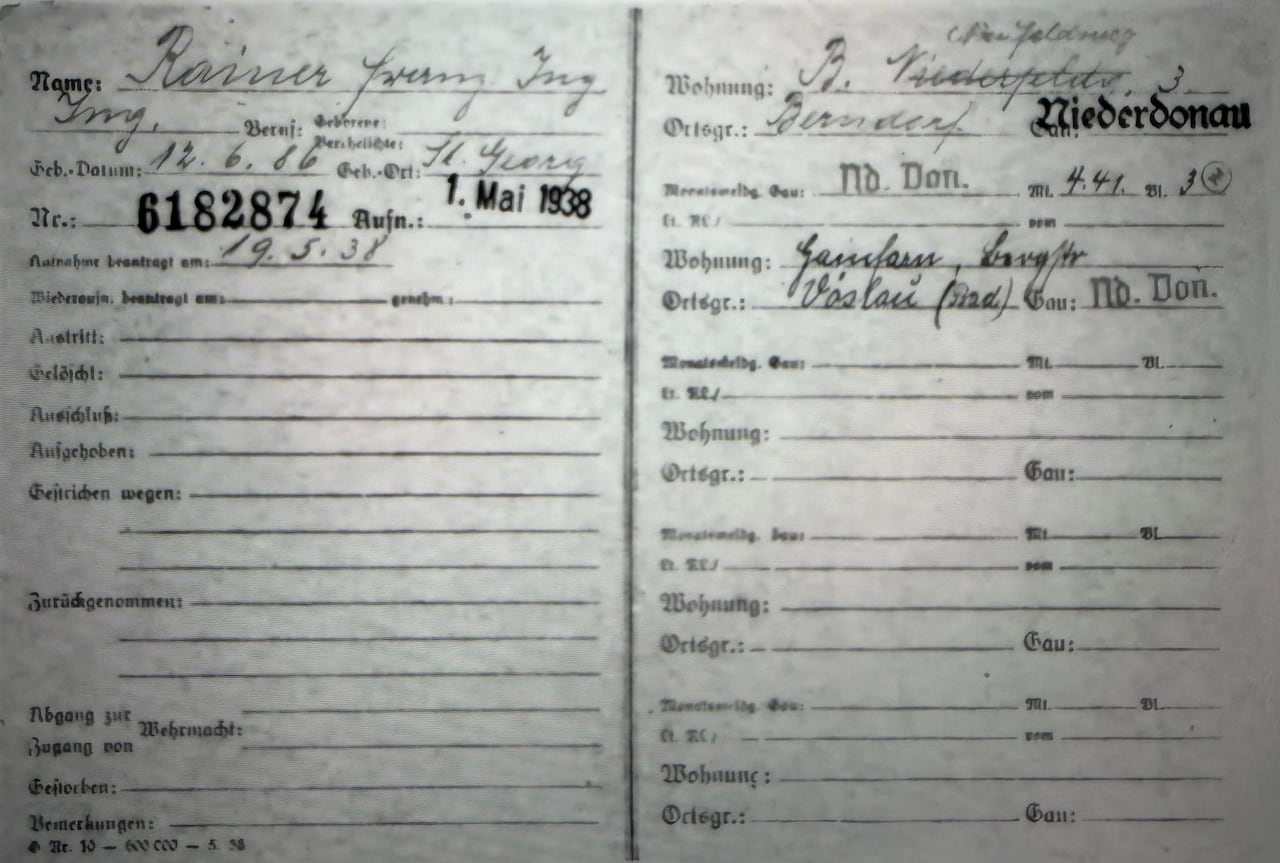
Franz Rainer’s NSDAP-Mitgliederkartei, or Nazi Party membership card. (Die Zeit/U.S. National Archives)
Austrians, particularly, he notes, are still struggling to confront their nation’s Nazi history.
While Nazi Germany annexed Austria, historians have increasingly highlighted the significant support for Adolf Hitler in Austria during the Second World War, as well as the country’s involvement in anti-Jewish pogroms.
“There was extensive repression, and it took one or two generations to begin addressing it,” Rainer stated.
With the growing influence of far-right parties in governments worldwide, Rainer believes it is crucial to be transparent about history and vigilant to prevent its repetition.
“It could happen anywhere,” he warned. “It could also occur in Canada. Just look at the United States.”
