
In Cherie Dimaline’s Empire of Wild, a trio of women across three generations battles to rescue a loved one from the clutches of the werewolf-like Rogarou, aiming to bring back a missing husband while safeguarding their land from corporate exploitation.
The narrative is raw, passionate, and filled with tension, earning the title of Indigo’s top book of 2019, surpassing major works like The Testaments by Margaret Atwood and Daisy Jones & The Six by Taylor Jenkins Reid.
Currently, an investment of approximately $4 million is being allocated to assemble an Indigenous-led creative team that will adapt the book into an opera, with plans for its world premiere in Toronto next spring.
This venture could potentially attract a younger demographic and newcomers to opera, while also challenging traditionalists who favor the classic repertoire.
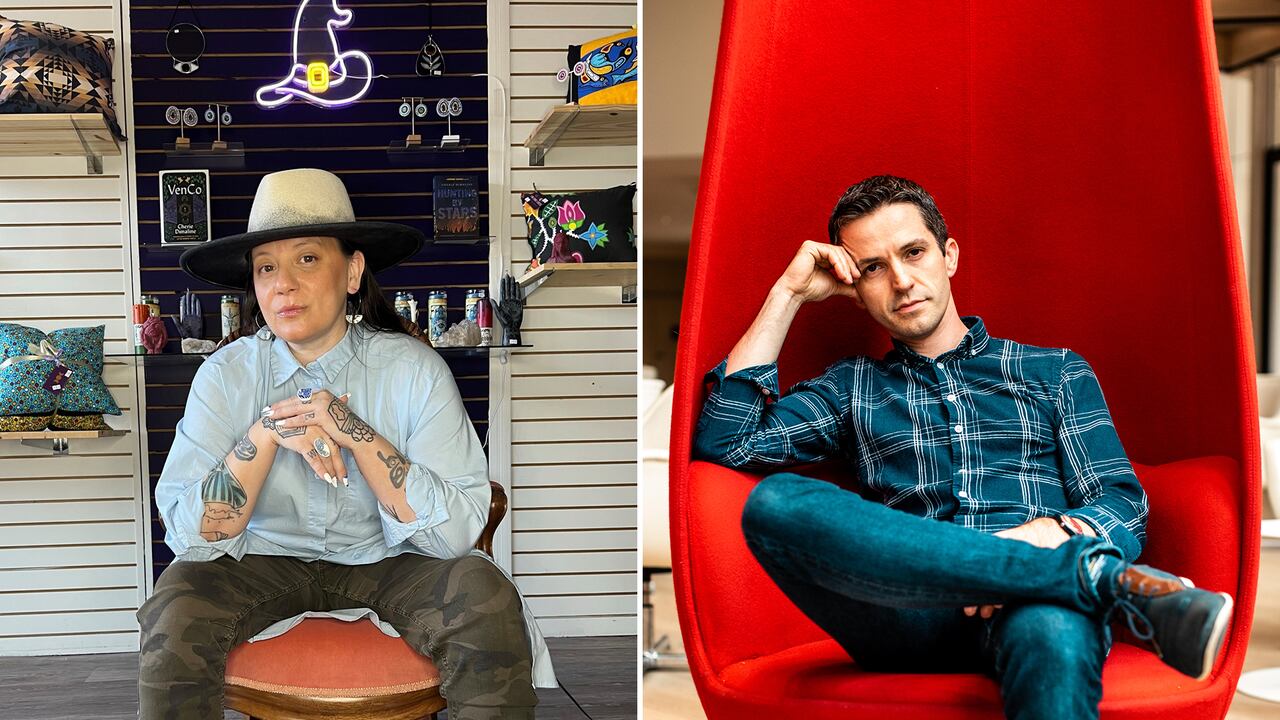
Author Cherie Dimaline and composer Ian Cusson hail from the Métis community near Georgian Bay, Ontario, the setting for Empire of Wild. (Submitted by Cherie Dimaline, John Arano)
Empire of Wild unfolds within the Georgian Bay Métis community of Penetanguishene, Ontario, where Dimaline was raised. Composer Ian Cusson shares this background, and upon reading the book, he recognized the Rogarou from tales his mother shared.
“Despite being fictional, I found the characters familiar and their dialogue reminiscent of what I heard growing up,” he expressed to CBC News earlier this month in Toronto while the cast and orchestra were in the process of workshopping the new composition.
“The radical proposition we’re making is to establish [the opera] as a venue where stories like this can thrive,” Cusson explained.
“These narratives don’t need to be confined to tales from 200 years ago or from Europe… They can reflect contemporary experiences.”
Contemporary Narratives
Cusson mentioned that he and Dimaline, who penned the libretto, aimed to craft modern characters that contemporary audiences could relate to.
“There are queer characters and a family of roofers from a working-class background, navigating their daily lives while facing extreme challenges.”
Their dialogue reflects that of today’s society, incorporating profanity and humor. “Yes, there are f-bombs,” Cusson remarked, acknowledging that this may not align with expectations of traditional operatic performances.
He characterized this production as akin to a “film on steroids,” expressing his enthusiasm for exploring the darker, horror-like aspects of the narrative.
“It truly resonates with what younger audiences seek from an entertainment experience,” he stated.
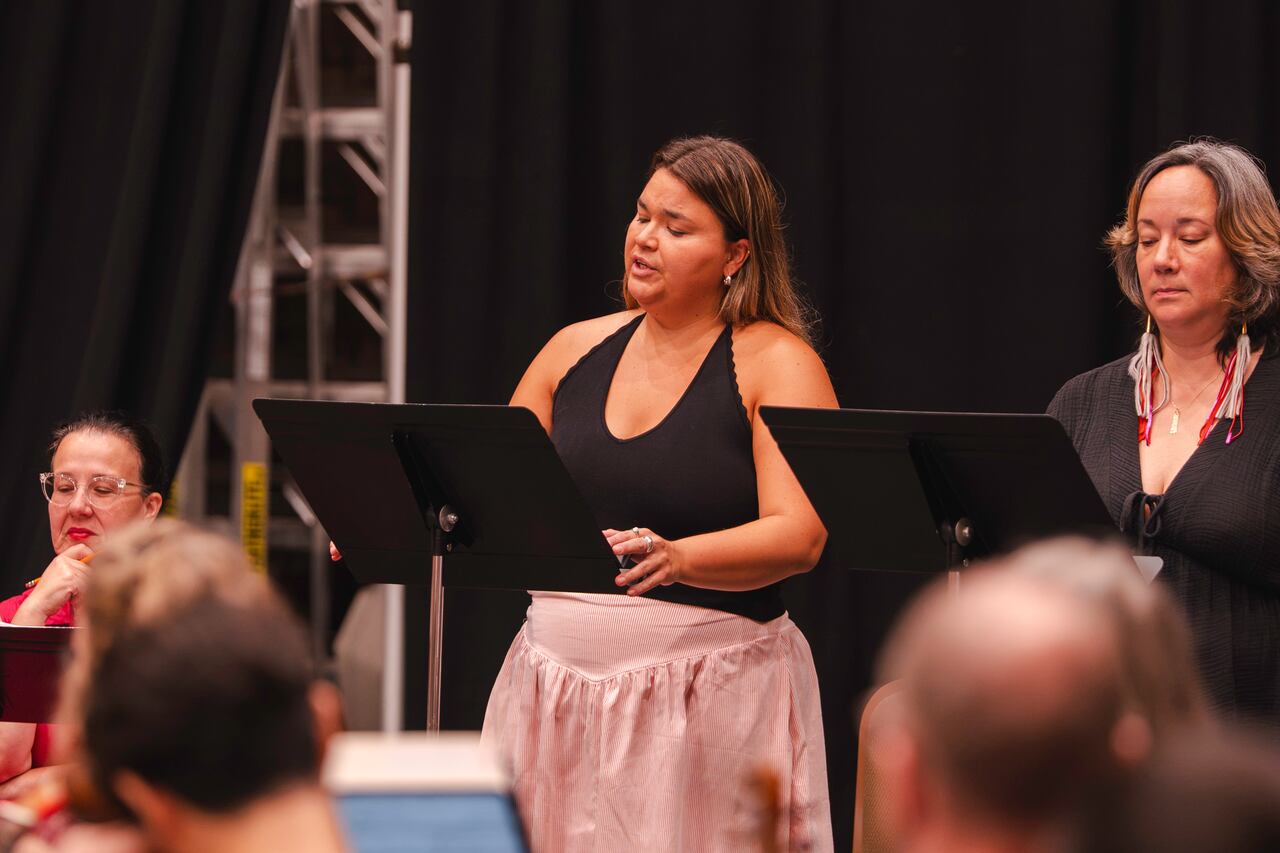
Innu soprano Elisabeth St-Gelais will portray Joan, whose husband vanishes one night following a disagreement about the sale of her land. (Taylor Long/Canadian Opera Company)
Elisabeth St-Gelais, a 30-year-old Innu soprano, takes on the role of Joan. She has read Empire of Wild twice and believes the story has much for younger audiences to connect with.
“[Joan] has a couple of… maybe unhealthy coping mechanisms that she turns to during crises… And I think it’s valuable to depict that,” she noted, referring to her character’s nights of heavy drinking as she deals with her husband’s disappearance.
Defying Norms
At its core, Empire of Wild explores themes of power, resistance, and resilience.
Joan’s husband goes missing after an argument regarding the sale of her land. Eleven months later, when she discovers him, he is a preacher who seems to have forgotten her, and he is being overseen by a man too invested in industrial developments in the area.
Dark forces are at work, and only ancient magic, passed through generations, can bring Joan back to her beloved. Both Cusson and St-Gelais emphasized that this aspect of the story highlights the importance of intergenerational support within strong matrilineal lines.
The narrative draws inspiration from the Métis legend of the Rogarou, featuring a diverse cast that includes talents like Kwagiulth and Stó:lō mezzo-soprano Marion Newman and Anishinaabe baritone Evan Korbut.
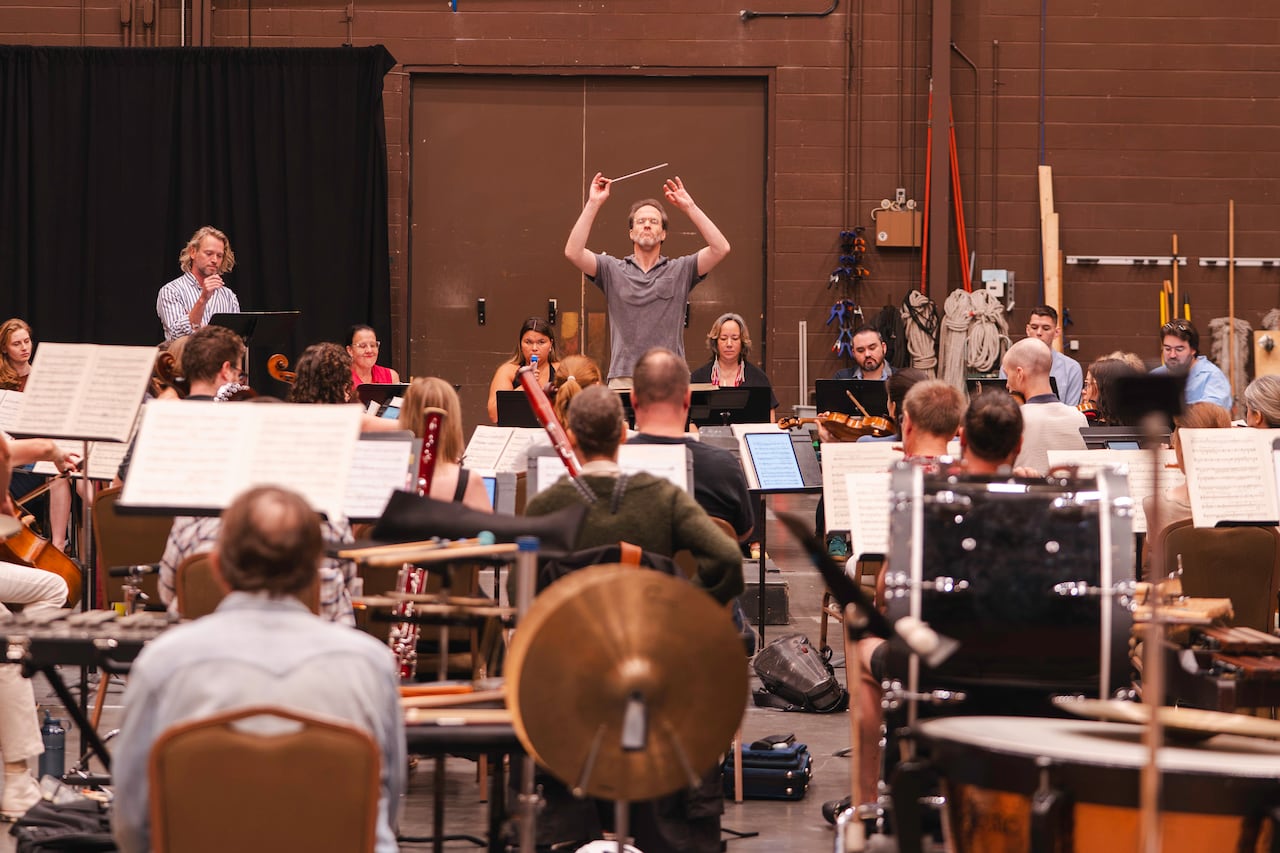
Johannes Debus leads the orchestra as the cast and Indigenous-led creative team workshop the music for Empire of Wild in Toronto on Aug. 14. (Taylor Long/Canadian Opera Company)
“The Indigenous artists bringing these roles to life… while their experiences may differ, they convey a truth resonant among many Indigenous peoples,” Cusson remarked. “It’s a narrative of resilience, survivance, and survival.”
“Survivance,” a term blending survival and resistance, is utilized by Indigenous scholars to illustrate how Indigenous communities have not only endured settler colonialism but have also preserved their cultural practices, enhancing them and developing new ones along the way.
A Unique Creation Narrative
St-Gelais expressed that collaborating on an opera spearheaded by Indigenous creators has been an extraordinary journey.
“Indigenous communities are experiencing a moment of flourishing across various sectors, including science, art, and business,” she shared with CBC.
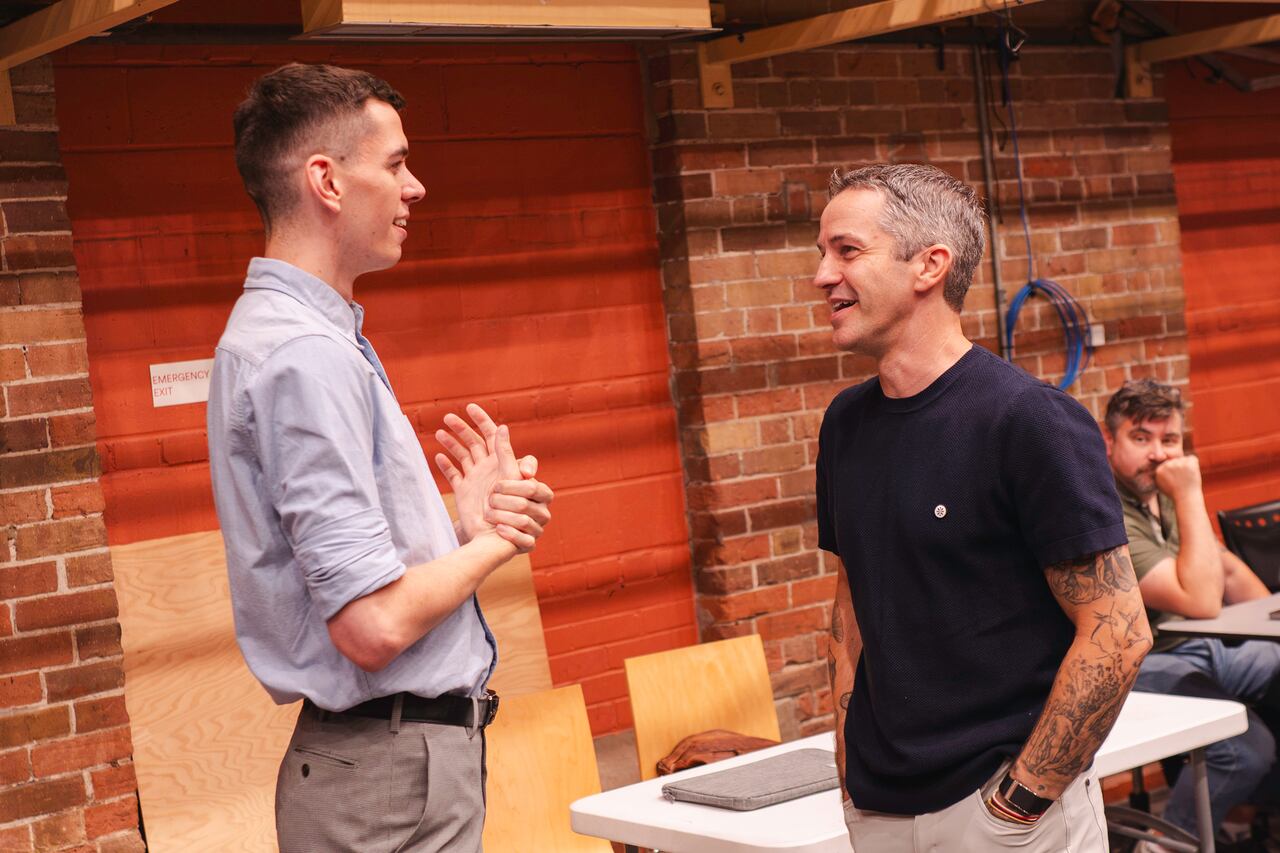
Canadian countertenor Sean Haid converses with Empire of Wild composer Ian Cusson during an opera workshop in Toronto. (Taylor Long/Canadian Opera Company)
Cree costume designer Jeff Chief is part of the creative ensemble, along with Algonquin director Yvette Nolan, whose insights Cusson often references to illustrate the distinct Indigenous approach to art-making:
“Rather than adhering to a triangular hierarchy, where one individual is positioned at the apex, we aim to reshape the triangle into a circle that embraces all voices.”
This philosophy promotes equality among contributors, where everyone, even those handling the simplest tasks, is included in the creative process and their input is valued.
Cusson expressed his desire to see this collaborative method applied in other operas and by various opera companies.
“This approach should be adopted everywhere. It’s the most effective way to create art.”
