
Members of the Liberal Party on the House justice committee supported a proposal from the Bloc Québécois aiming to eliminate a religious exemption in Canada’s hate speech legislation — a suggestion that initially seemed to impede the government’s efforts to advance anti-hate laws.
As it stands, the Criminal Code provides an exemption for hate speech if an individual, “in good faith, expressed or attempted to argue an opinion on religious matters or an opinion derived from a belief in a religious text.”
On Tuesday night, the justice committee incorporated a Bloc amendment into the Liberals’ Bill C-9, known as the Combatting Hate Act, which seeks to remove this religious exemption.
Bloc Québécois Leader Yves-François Blanchet informed the media last week that his party reached an agreement with the Liberals to include the amendment in exchange for their backing of C-9. This agreement was first reported by the National Post.
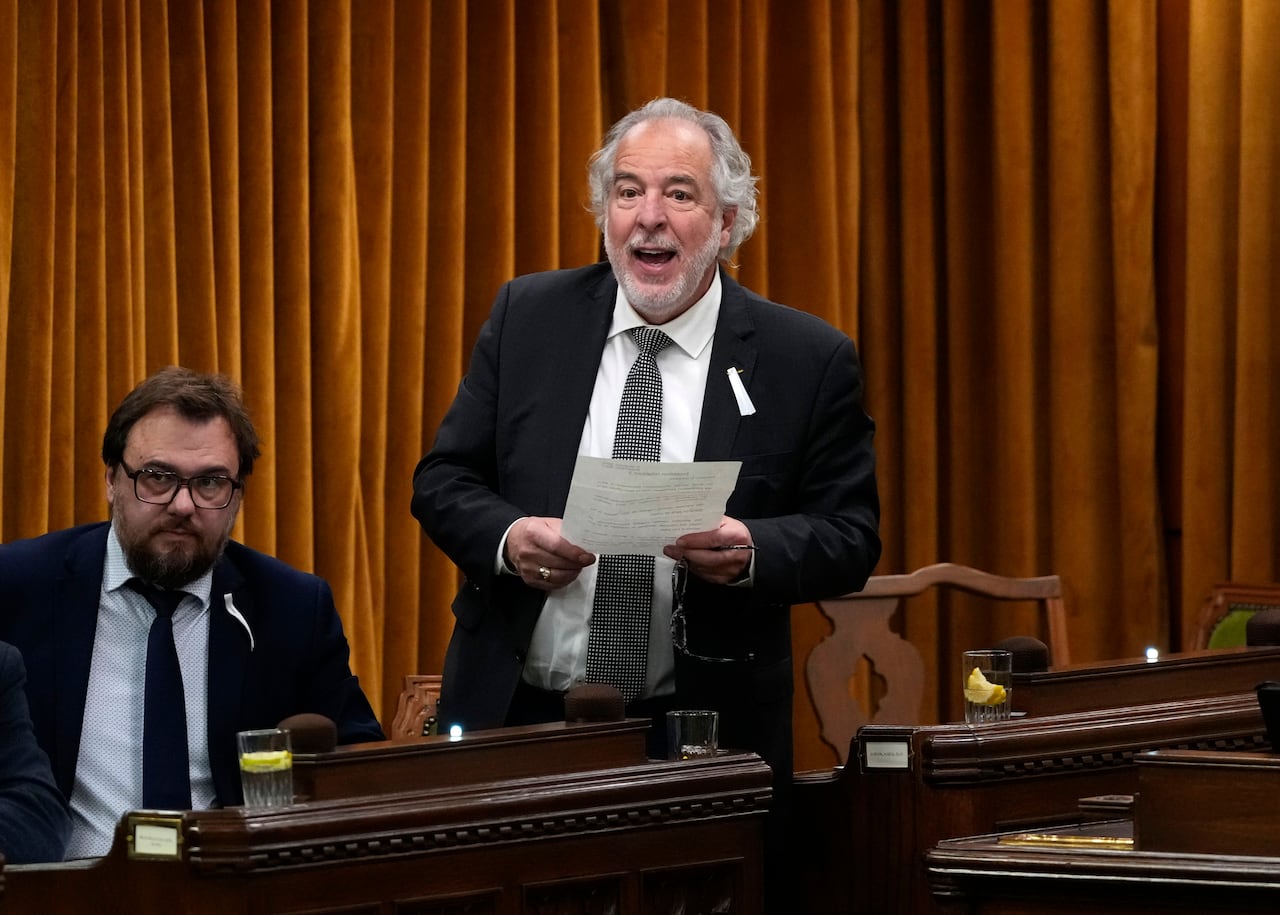
Bloc Québécois MP Rhéal Fortin presented the amendment at the justice committee. (Justin Tang/The Canadian Press)
However, momentum seemed to falter after an initial committee session to review the bill was unexpectedly cancelled last week.
Three sources informed CBC News that the bill was delayed because Justice Minister Sean Fraser’s office arranged the deal with the Bloc without consulting the Prime Minister’s Office.
Tuesday’s meeting was hastily organized following last week’s cancellation.
The Bloc has consistently aimed to eliminate the religious exemption, arguing that religion could be misused as a justification for inciting hate, including homophobia and antisemitism.
Blanchet stated that his party would withhold support for the bill unless the amendment was included.
Concerns Raised by Religious Groups
The Conservative Party opposes both the amendment and the bill as it stands. Party Leader Pierre Poilievre expressed on his X account last week that the Bloc amendment would “criminalize portions of the Bible, Qur’an, Torah, and other sacred texts.”
The news of the agreement also led various religious organizations, including Catholic and Muslim groups, to voice their concerns, arguing that it could suppress or even criminalize religious expression.
“I believe all Canadians can see that this is a matter that impacts everyone, including those who are religious and those who are not,” stated Haseeb Hassaan, spokesperson for the National Council of Canadian Muslims.
Conservative committee members criticized the fact that MPs were not given the chance to hear from witnesses regarding the proposed amendment.
“[The Liberals] are ready to launch, with the help of the Bloc Québécois, a full-scale assault on religious freedom,” Ontario MP Andrew Lawton remarked during Tuesday’s session.
Following the passage of the Bloc amendment, Conservative MPs engaged in a filibuster during Tuesday’s meeting, resulting in the adjournment of the session without finishing the clause-by-clause examination.
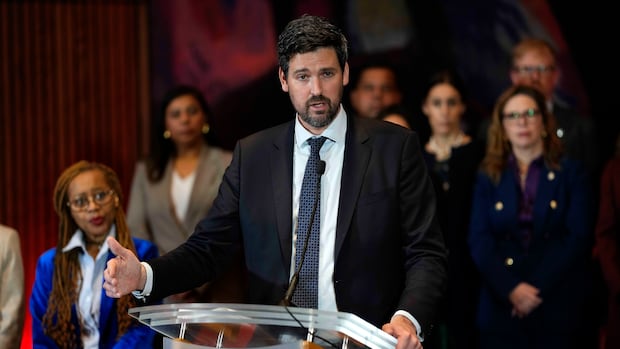
Justice Minister Sean Fraser stated on Tuesday that the Bloc Québécois’s proposed amendment to Bill C-9 would not ‘prevent a religious leader from reading their religious texts.’ Fraser emphasized his alignment with the Prime Minister’s Office regarding the bill and other matters.
Fraser, however, countered these concerns, highlighting that religious freedom is a right protected under the Charter.
“The amendment proposed by the Bloc will … in no way prevent a religious leader from reciting their religious texts. It will not criminalize faith,” Fraser stated during a news conference earlier on Tuesday.
“We are addressing issues related to the intentional promotion of hate. This is not a principle upheld by major religions.”
In a subsequent statement shared on social media, Fraser argued that the exemption is superfluous and the government is unaware of any instances where it has been used to absolve an individual accused of hate speech.
Bill C-9 introduces new offences under the Criminal Code, including a provision that would criminalize the intentional promotion of hatred against identifiable groups in public through specific hate- or terrorism-related symbols.
-
Bloc wants Liberal bill amended to remove religious exemption from hate speech laws: source
-
Bloc says Liberals ‘fear backlash’ from removing religious exemptions in hate speech law
These symbols comprise those associated with the Holocaust — including the swastika and SS lightning bolts — or symbols linked to the government’s list of terrorist organizations, which features the Proud Boys, Hamas, and Iran’s Islamic Revolutionary Guard Corps.
Additionally, the legislation aims to categorize hate-motivated crimes as distinct offences and to address willful intimidation and obstruction of individuals outside places of worship and other sensitive institutions.
The bill must still undergo a third reading in the House and then proceed through the Senate before it can be enacted into law.
Tag: rewrite-pending
