
According to Lebanon’s Health Ministry, an Israeli airstrike on Friday resulted in the deaths of two individuals in the southern village of Touline. This incident occurred as the Israeli military instructed residents to evacuate another southern Lebanese town, just one day after Israel and Lebanon agreed to extend their ceasefire by an additional three weeks.
The Israeli armed forces claimed that Hezbollah was active in the town, although they did not provide evidence or a timeline, cautioning that any militant actions from the southern town of Deir Aames would trigger a response from Israel.
Hezbollah, which is backed by Iran, declared the ceasefire mediated by the U.S. to be meaningless after it successfully shot down an Israeli drone, identified as a Hermes 450.
On Friday, reporters from Reuters reported the presence of an Israeli drone flying over Beirut throughout the day.
The Israeli military urged residents of Deir Aames to vacate their homes immediately, stating that they intended to take action against “Hezbollah activities” in the area.
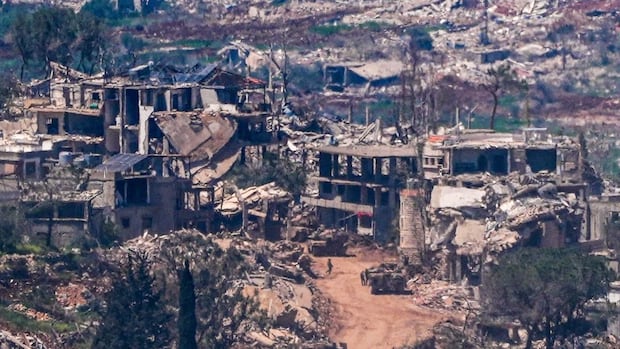
The Israeli military has ordered residents to evacuate the southern Lebanese town of Deir Ames, north of its self-declared ‘security zone,’ saying it planned to carry out strikes there, a day after Israel and Lebanon extended a ceasefire by three weeks.
Deir Aames is situated north of the territory occupied by Israeli forces, marking the first instance where Israel has issued such a warning since the ceasefire agreement took effect on April 16.
The warning, shared on social media, did not specify the nature of the activities attributed to Hezbollah in the town.
Additionally, the Israeli military reported intercepting a drone before it entered Israeli airspace, stating that sirens were activated as per standard procedure.
-
Lebanon and Israel agree to extend ceasefire for another 3 weeks, Trump says
-
3 Indonesian UN peacekeepers killed within 24 hours in south Lebanon
On Friday, Indonesia condemned an Israeli strike in Lebanon that resulted in the death of a fourth Indonesian peacekeeper, according to the Foreign Affairs Ministry.
The peacekeeper succumbed to severe injuries sustained from an Israeli tank’s artillery explosion on March 29, and the ministry reported his death occurred on Friday. Three other Indonesian peacekeepers had also perished due to the same attack.
Indonesia called on the United Nations to carry out a comprehensive, transparent, and accountable investigation regarding the deaths of its UNIFIL peacekeepers.
Hezbollah lawmaker calls ceasefire ‘meaningless’
On Thursday, U.S. President Donald Trump announced the three-week extension following a meeting with Israeli and Lebanese ambassadors at the White House. This ceasefire agreement was set to expire on Sunday.
UN Secretary-General António Guterres expressed his support for the ceasefire extension in a statement on X on Friday, urging all involved parties to “fully respect the cessation of hostilities, cease any further attacks & comply with their obligations under international law.”
Despite the ceasefire leading to a notable decrease in hostilities, exchanges of fire between Israel and Hezbollah have continued in southern Lebanon, where Israeli troops remain stationed in a self-declared “buffer zone.”
In response to the ceasefire extension, Hezbollah parliament member Ali Fayyad remarked that “it is crucial to highlight that the ceasefire is meaningless given Israel’s persistent aggressive actions, including assassinations, shelling, and gunfire,” as well as its destruction of villages and towns in the south.
“Every Israeli attack … grants the resistance the right to respond proportionately,” he stated.
Hezbollah, not being a signatory to the ceasefire agreement, has vehemently opposed Lebanon’s direct engagement with Israel.
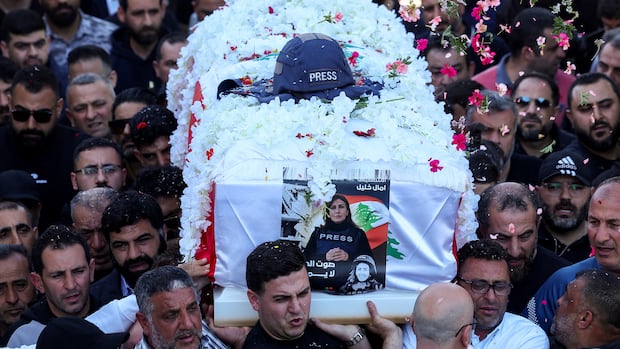
Israel’s killing of Lebanese journalist Amal Khalil has strained efforts to extend the fragile ceasefire and inflamed anger in southern Lebanon, where many believe Israel is targeting whomever it wants, despite the truce.
The agreement established on April 16 does not necessitate the withdrawal of Israeli forces from the southern Lebanese region they captured during the conflict. This buffer zone spans five to ten kilometers into Lebanon.
Israel asserts that this buffer zone is intended to safeguard northern Israel from Hezbollah assaults, which have involved hundreds of rocket launches aimed at Israel during the conflict.
Fighting between Hezbollah and Israel reignited on March 2 when the group initiated fire in support of Iran, following U.S. and Israeli strikes on Iran on February 28.
The ceasefire in Lebanon developed independently of Washington’s attempts to settle its disputes with Tehran, although Iran has advocated for Lebanon’s inclusion in any wider truce.
As reported by the Lebanese Health Ministry, close to 2,500 individuals have lost their lives in Lebanon since March 2.
Hezbollah’s assaults have resulted in the deaths of two civilians in Israel following March 2, while Israel claims that 15 of its soldiers have died in Lebanon since that date.
Residents question ceasefire deal
The ongoing conflict has frustrated Lebanese citizens who are weary of war, as they seek a genuine ceasefire to completely end the violence.
“What is this? Is this really a ceasefire? Or is it a mockery of [people’s] intelligence?” questioned Naem Saleh, a 73-year-old newsstand owner in Beirut.
Residents in northern Israel largely resumed their daily routines, yet many expressed skepticism about the sustainability of the ceasefire with Lebanon.
“I think the ceasefire is very fragile and, unfortunately, it won’t last long, in my opinion,” stated Eliad Eini, a resident of Nahariya, located just 10 kilometers from the Lebanese border.
On Wednesday, Israeli airstrikes resulted in the deaths of at least five individuals in the south, including a journalist.
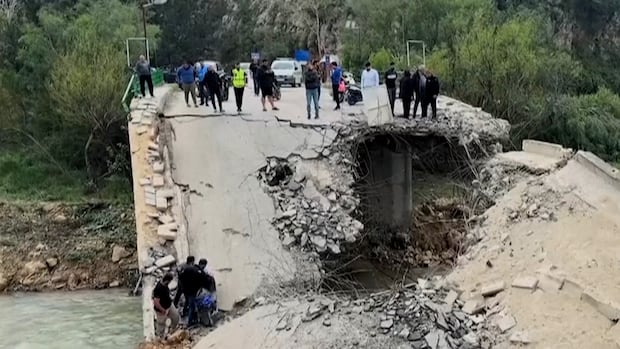
Israel declared roughly 50 towns and villages in southern Lebanon as ‘no-go’ zones during a 10-day ceasefire, with the military continuing mass demolition it says is necessary to eliminate Hezbollah infrastructure. Residents say it’s Israel’s way of deepening its footprint in the region.
In his opening remarks during Thursday’s discussions, Israel’s ambassador to Washington, Yechiel Leiter, stated, “Lebanon should recognize the temporary presence of the IDF [Israel Defence Forces] and Israel’s right to protect itself from a hostile force that is targeting the civilian population.”
In a written statement to Reuters, Lebanon’s ambassador to the U.S., Nada Moawad, advocated for the full respect of the ceasefire, asserting that it would create the necessary conditions for substantive negotiations.
Lebanon has expressed its intention to ensure the complete withdrawal of Israeli troops from its territory in future discussions with Israel.
Trump mentioned on Thursday that he looked forward to welcoming Israeli Prime Minister Benjamin Netanyahu and Lebanese President Joseph Aoun soon, adding that there is a “great chance” for both nations to arrive at a peace agreement within this year.
