
Overnight, Brent crude oil prices briefly rose above $126 US per barrel, marking the highest level since March 2022, before retreating. This fluctuation comes amid stalled negotiations between the U.S. and Iran, casting uncertainty over the potential reopening of the Strait of Hormuz and the prospect of a lasting resolution to the conflict in the Middle East.
As of 4:15 p.m. Thursday, Brent crude scheduled for delivery in June has dropped to approximately $111 US per barrel. Prior to the onset of the war in late February, the price was around $70 US per barrel.
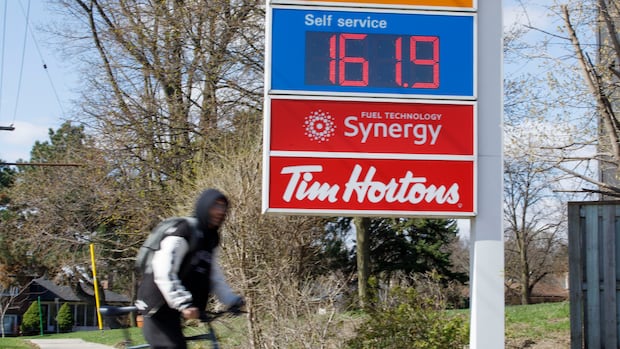
Concurrently, gasoline prices are on the rise. In Canada, the average cost for a litre of gasoline was $1.830 on Thursday afternoon according to GasBuddy — an increase of 4.5 cents from the previous day and up 47.9 cents from a year ago. British Columbia saw the highest prices, averaging just over $2 per litre.
Further increases in fuel costs are anticipated. In the Greater Toronto Area, predictions indicate prices at the pump may reach $1.899 per litre. Halifax could see prices around $1.897 per litre, while Edmonton might experience costs of $1.859 per litre.
In the U.S., the national average for gasoline is currently about $4.375 per gallon.
There remains no clear resolution to the ongoing war, which has seen Iran restrict access to the Strait of Hormuz while the U.S. has imposed blockades on Iranian ports, driving up oil prices. Reports on Thursday indicated a potential escalation from President Donald Trump, dampening hopes for a swift conclusion to the conflict.
- Are rising gas prices impacting your daily life or summer plans? We’d love to hear from you. Click the “Join the Conversation” button at the top or bottom of this story. Using the app? Join here.
According to ING Bank strategists Warren Patterson and Ewa Manthey, “The collapse of negotiations between the U.S. and Iran, along with President Trump reportedly dismissing Iran’s offer to reopen the Strait of Hormuz, has led the market to lose faith in a swift return to oil supplies.”
Traders continuously buy and sell various oil contracts that can extend for months. Within the most actively traded segment of the Brent crude market, the international benchmark, prices reached as high as $114.70 overnight for July delivery before retracting to around $107 and ultimately settling at $110.40 — nearly unchanged from the previous day but still elevated compared to pre-war levels.
To date, the highest price for the most actively traded Brent contract during the war has been $119.50, which was recorded last month.
This price correction, along with a steady stream of better-than-expected earnings reports from U.S. firms, has contributed to Wall Street maintaining stability near record highs.
In North America, stock markets experienced gains on Thursday following strong profit reports from major companies such as Alphabet. The S&P 500 increased by one percent, surpassing its previous all-time high. The Dow rose by 1.6 percent, and the Nasdaq composite climbed by 0.9 percent.
-
U.A.E. leaving OPEC amid Middle East energy supply crunch
-
High gas prices are reshaping how Canadians and Americans buy, rent vehicles
Companies like Caterpillar, Eli Lilly, O’Reilly Automotive, and Royal Caribbean all saw their stocks rise after reporting quarterly profits that exceeded analysts’ predictions.
In the bond market, Treasury yields declined following the retraction of oil prices from their significant overnight highs.
CBC’s senior business correspondent Peter Armstrong explains why oil prices are so significant to federal revenues after Prime Minister Mark Carney’s government delivered its spring economic statement.
Internationally, stock markets displayed mixed results.
The UK’s FTSE 100 gained 1.6 percent after the Bank of England decided to maintain its main interest rate at 3.75 percent, as policymakers evaluate the economic repercussions of the Iran conflict.
Germany’s DAX increased by 1.4 percent, while France’s CAC 40 rose by 0.5 percent after the European Central Bank also chose to keep its interest rates unchanged.
Most Asian stocks experienced declines, with Hong Kong’s Hang Seng dropping by 1.3 percent, while the Shanghai Composite index ended slightly up by 0.1 percent.
Tag: rewrite-pending
