
Health officials and government statistics reviewed by Reuters indicate a decline in the number of patients visiting certain HIV treatment facilities in Senegal, coinciding with a surge in arrests of 2SLGBTQ+ individuals, jeopardizing the nation’s battle against the virus.
In the previous month, Senegal, where same-sex relations are prohibited, escalated the maximum imprisonment for same-sex sexual activities to ten years and outlawed what it termed as any attempts to promote such acts. The maximum fine was also raised to 10 million CFA francs (approximately $24,450).
Local human rights advocates and media reports reveal that 86 individuals have been detained in a crackdown that commenced in early February, coinciding with President Bassirou Diomaye Faye’s government gearing up to introduce the new anti-2SLGBTQ+ legislation in parliament.
This includes 18 individuals arrested in a single operation on April 19 in Linguere, located around 300 kilometers northeast of Dakar. Two convictions have been recorded under the new legislation.
The detainees have been charged with “acts against nature” and, in certain cases, intentionally transmitting HIV to others. The government did not disclose the total number of arrests made.
Data from Senegal’s National Council for the Fight Against AIDS (CNLS), provided to Reuters, indicates that patients are avoiding crucial antiretroviral medications, which are essential for both treating and suppressing HIV, due to fears of arrest or mistreatment.
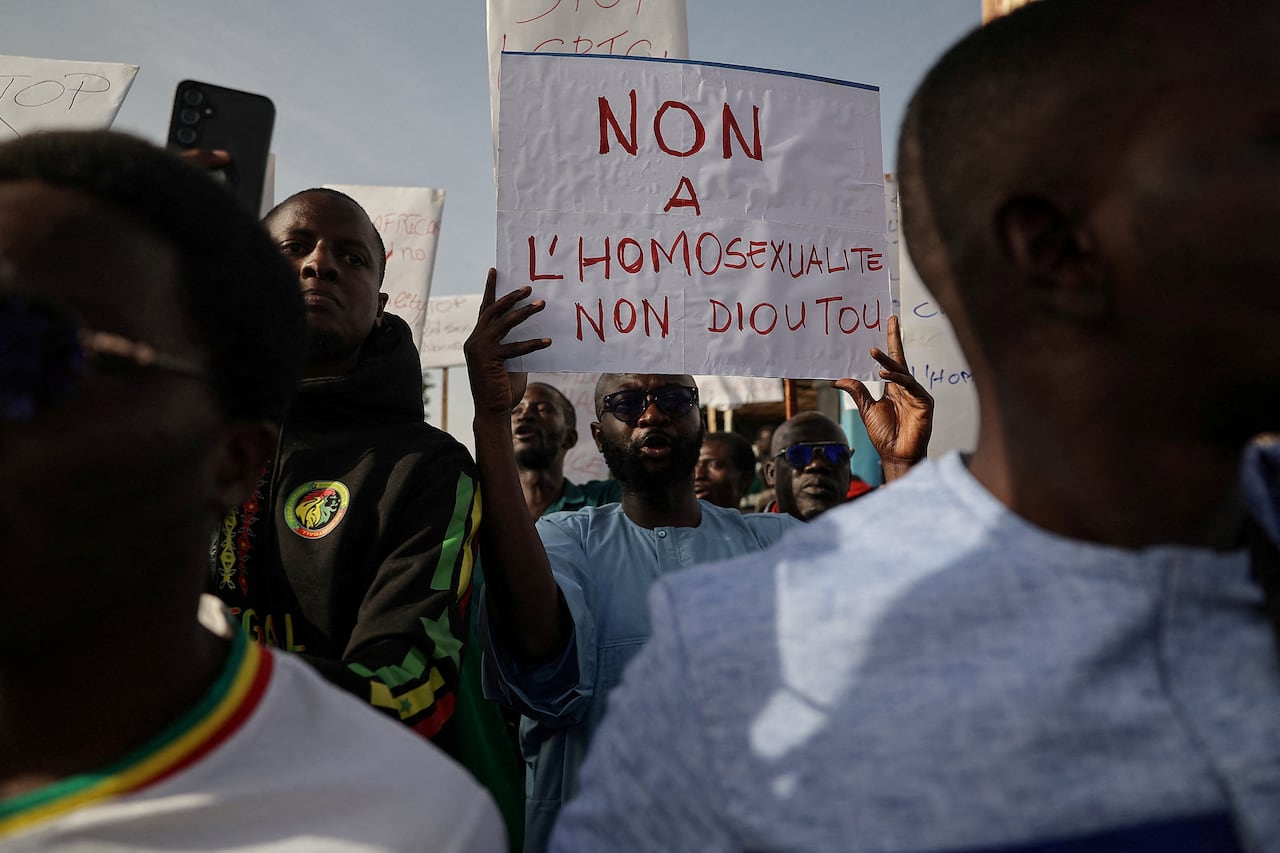
Anti-2SLGBTQ+ protesters march through the streets of Dakar, Senegal, on Feb. 14, demanding stricter measures after authorities detained individuals for what police classified as crimes, including same-sex intercourse and intentional HIV transmission. (Zohra Bensemra/Reuters)
Requests for comments from a government spokesperson, a police representative, and a lawmaker who supported the legislation went unanswered.
In an unprecedented move, some Senegalese media have endangered the arrested individuals by disclosing their full names and HIV statuses, according to Dr. Safiatou Thiam, a former health minister and executive director of CNLS.
“We are genuinely concerned — and this has been validated — that this arrest wave will negatively impact our efforts,” she stated, noting that healthcare workers are dedicated to maintaining patient confidentiality and encouraging law enforcement to respect it as well.
Senegal is one of only four nations in West and Central Africa that has seen an increase in new HIV infections in recent years, as reported by UNAIDS.
‘I don’t dare leave the house’
A queer community health worker in Senegal, who previously provided tests and HIV prevention resources in Dakar, now feels unsafe going outside.
“I no longer feel safe leaving my home; I’m essentially confined indoors. I ensure all doors and windows are securely locked to prevent being discovered,” they shared, requesting anonymity due to concerns of retaliation.
“I worry that there will be more HIV-related fatalities … people will hesitate to take or keep their medication. Some may even opt out of their treatment due to fear of being seen or associated with it.”
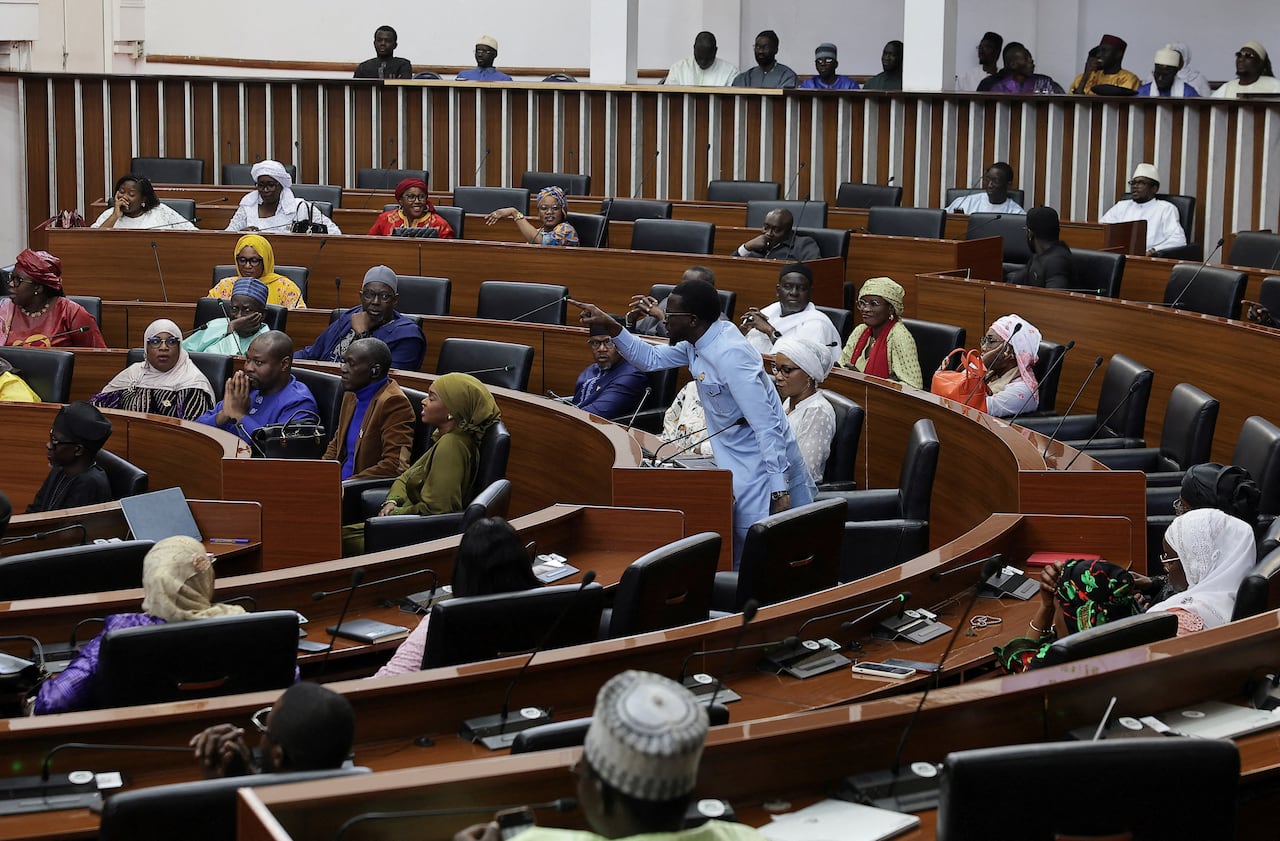
Senegalese lawmaker El Hadj Ababacar Tambedou addresses parliament on March 11 during discussions on a new bill that would increase the maximum punishment for same-sex sexual acts to 10 years and criminalize the promotion of homosexuality. (Zohra Bensemra/Reuters)
Reuters previously reported that Senegalese advocates for the anti-2SLGBTQ+ legislation had strategized with a U.S.-based “pro-family” organization that labels homosexuality as a public health threat.
Patients cite fear of arrests, harassment
The CNLS carried out a survey across 22 HIV/AIDS treatment centers over three days at the end of February, following warnings that the arrests could result in decreased HIV testing and interruptions in treatment.
The survey results indicated that 1,803 patients attended in February, a decline from 2,425 in January — representing a 25.6% decrease.
Subsequent interviews by CNLS with over 50 men who have sex with men (MSM) revealed their avoidance of these facilities due to fears of denunciation, arrest, or verbal and physical abuse.
The unpublished findings clearly indicate that the decline in patients is associated with the arrests, according to Dr. Cheikh Bamba Dieye, head of the research unit at CNLS.
The national prevalence of HIV in Senegal stands at 0.3%, significantly lower than the countries most affected on the continent, many of which are in southern Africa. However, new infections rose by 36% from 2010 to 2024, as reported by UNAIDS.
When a patient discontinues treatment, the virus becomes more easily transmissible.
In Senegal, HIV is predominantly found within specific key populations such as MSM, where the prevalence is recorded at 27.6%, based on government statistics.
The World Health Organization has raised alarms in recent years regarding the resurgence of HIV epidemics among MSM and has urged governments to abolish punitive laws, curb discrimination, and tackle homophobic violence.
UNAIDS responded to Senegal’s recent legislation, stating: “Evidence indicates that criminalization drives individuals away from health services.”
The HIV/AIDS treatment facilities surveyed by CNLS cater to all HIV patients, but there are signs that certain groups may face greater challenges due to treatment interruptions.
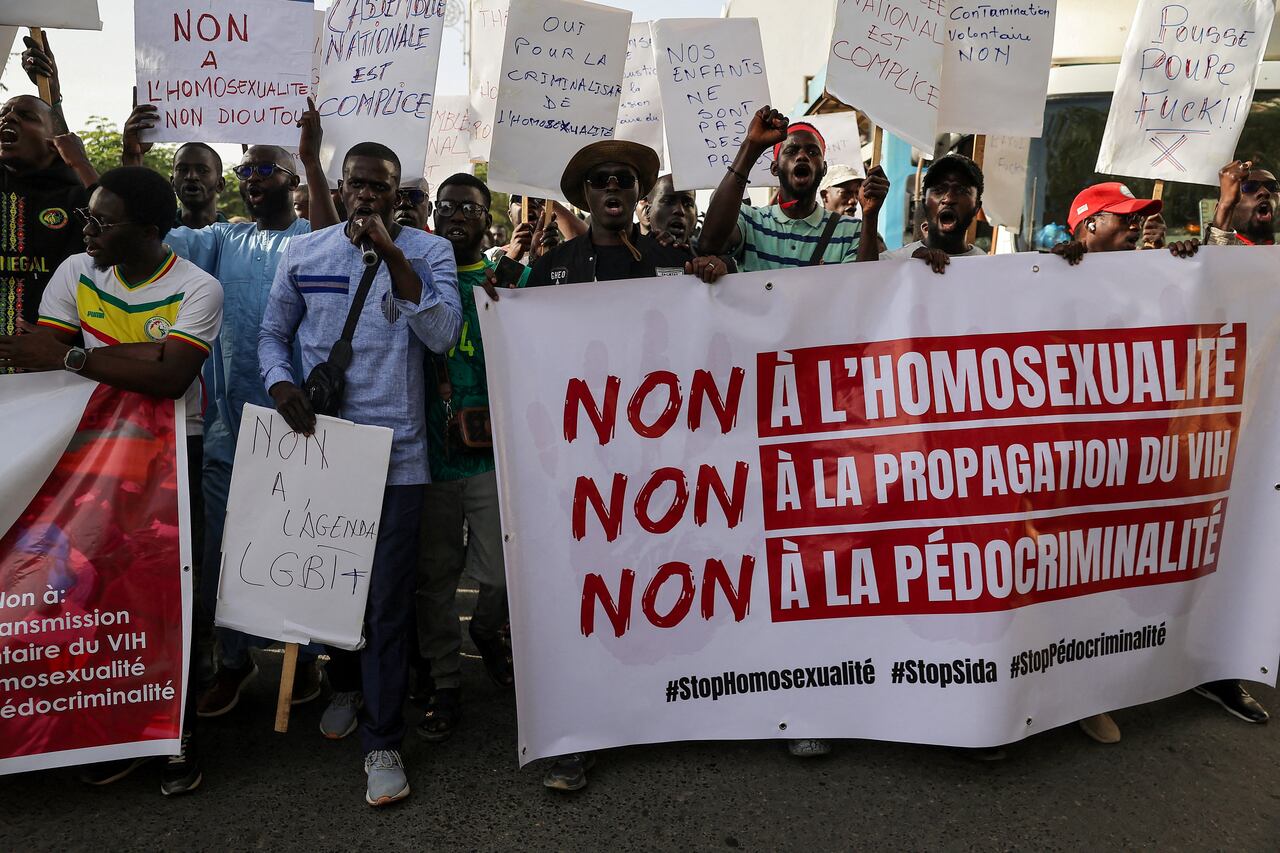
Anti-2SLGBTQ+ protesters march through the streets of Dakar on Feb. 14, demanding stricter measures after authorities detained individuals for what police classified as crimes, including same-sex intercourse and intentional HIV transmission. (Zohra Bensemra/Reuters)
In an email sent on Feb. 23, the National Alliance Against AIDS (ANCS), an NGO working with key populations, notified partners that it was “suspending interventions aimed at the groups most vulnerable to HIV/AIDS, particularly MSM and transgender individuals.”
The email, which was reviewed by Reuters, cited “the challenging working environment” resulting from the arrests as the reason for this decision.
The new legislation contains a clause stating that activities conducted by health organizations will not be deemed illegal.
While some MSM have fled to neighboring countries such as Mauritania, Gambia, and Ivory Coast, others who remain in Senegal have adopted a more discreet lifestyle.
“We’ve observed many individuals lost to follow-up care in hospitals because they fear that ‘once I go to a hospital to collect my medication, I will be labeled a homosexual,'” said the community health worker.
“I am drained, both emotionally and physically. It’s exhausting, and I live in constant fear of arrest — for assisting my community in accessing healthcare, for forming an organization that advocates for the welfare of LGBTQ individuals … and simply for being gay.”
