
President Donald Trump of the United States has expressed dissatisfaction with Iran’s recent proposal aimed at ending the ongoing two-month conflict, according to a U.S. official, which has reduced optimism for a resolution to the hostilities that have disrupted energy supplies, increased inflation, and resulted in numerous casualties.
The new proposal from Iran suggests postponing discussions regarding its nuclear program until after the war concludes and issues surrounding shipping in the Gulf are addressed.
This approach is unlikely to meet U.S. expectations, which insist that nuclear matters must be prioritized from the beginning. A U.S. official familiar with Trump’s meeting with advisers on Monday, who requested anonymity, reported that the president was displeased with Iran’s offer for this reason.
White House spokesperson Olivia Wales stated that the U.S. “will not negotiate through the press” and emphasized that the administration has “been clear about our red lines” while seeking to conclude the war against Iran that commenced in February in conjunction with Israel.
A prior agreement from 2015, involving Iran and several other nations including the U.S., significantly limited Iran’s nuclear activities, which the nation claims are for peaceful civilian use. However, the accord collapsed when Trump unilaterally withdrew from it during his first term.
Efforts to revive peace talks have diminished since Trump canceled a planned visit to Islamabad by his envoy Steve Witkoff and son-in-law Jared Kushner on Saturday, where Iranian Foreign Minister Abbas Araghchi made two visits over the weekend.
Over the weekend, Araghchi also traveled to Oman and visited Russia on Monday, where he met with President Vladimir Putin, gaining support from a longstanding ally.
As the conflicting parties appear to remain far apart, oil prices began to rise again, continuing their upward trend in early trading on Tuesday in Asia.

The Strait of Hormuz is a narrow waterway that separates Iran from Oman. At its widest, it measures approximately 100 km across and serves as the sole maritime route for oil and other goods from the Persian Gulf to the open ocean. Sal Mercogliano, a former merchant mariner, discusses how this small geographic area has significant global implications.
Fawad Razaqzada, a market analyst at City Index and FOREX.com, remarked, “For oil traders, it’s the actual flow of crude oil through the Strait of Hormuz that is crucial, and currently, that flow is restricted.”
Recent ship-tracking data reveals that at least six tankers carrying Iranian oil have been compelled to return to Iran due to the U.S. blockade, highlighting the conflict’s effect on maritime traffic.
Trump convened his national security team on Monday morning.
White House press secretary Karoline Leavitt stated, “There was a discussion this morning that I don’t want to preempt, and you will hear directly from the president on this matter very soon.”
In Russia, Araghchi told reporters that Trump had expressed a desire for negotiations, as the U.S. has not met its objectives.
Senior sources from Iran, speaking on condition of anonymity, conveyed to Reuters that the proposal presented by Araghchi in Islamabad envisioned a phased approach to talks, with the nuclear issue initially set aside.
The initial step would involve concluding the U.S.-Israeli war against Iran and providing assurances that the U.S. would not reinitiate hostilities. Subsequently, negotiators would address the U.S. blockade and the status of the Strait of Hormuz, which Iran intends to reopen under its governance.
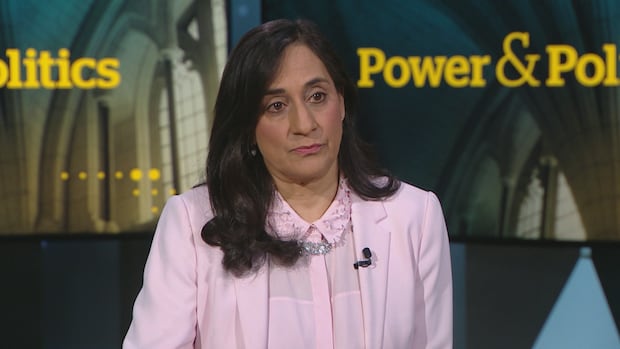
A shaky ceasefire is at risk as U.S. President Donald Trump orders his military to ‘shoot and kill’ any Iranian boat that may be laying mines along the Strait of Hormuz. That’s as Israeli and Lebanese envoys meet face-to-face in Washington to negotiate an extension to a separate ceasefire. Power & Politics asks Foreign Affairs Minister Anita Anand about where things stand in the war — and where Canada stands on possible violations of international law.
Only after these initial discussions would other topics, including the longstanding nuclear dispute, be addressed, with Iran still seeking some form of U.S. recognition of its right to enrich uranium for what it asserts are peaceful purposes.
Indicating a lack of imminent face-to-face discussions, streets in Islamabad, which had been closed off for a week in anticipation of negotiations, have now reopened.
Pakistani officials noted that while remote negotiations are ongoing, there are no plans for an in-person meeting until the parties are sufficiently close to finalize an agreement.
Despite a ceasefire halting the U.S.-Israeli strikes on Iran that began on February 28, no consensus has been reached regarding the terms for concluding a conflict that has caused numerous deaths, spiked oil prices, increased inflation, and cast a shadow on global economic growth.
Since the war’s onset, Iran has effectively restricted all shipping, except its own, from the Gulf through the Strait of Hormuz. This month, the U.S. initiated a blockade of Iranian vessels.
-
Analysis
Who’s really in charge in Iran?
-
Oil producers to begin unveiling profits and spending plans
Recent ship-tracking data indicates that at least six tankers filled with Iranian oil have been forced to return to Iran due to the U.S. blockade, highlighting the conflict’s repercussions on shipping routes.
On Monday, Iran’s foreign ministry condemned the U.S. seizure of tankers associated with Iran as “a blatant legitimization of piracy and armed robbery on the high seas,” in a statement posted on X.com.
Before the war, between 125 and 140 vessels typically navigated in and out of the strait daily; however, only seven ships made the crossing in the past day, according to ship-tracking data from Kpler and satellite analysis from SynMax, with none of those carrying oil intended for the global market.
As Trump’s approval ratings decline, he faces domestic pressure to conclude the unpopular conflict. Although Iran’s leadership has been militarily weakened, they have gained leverage through their ability to halt shipping in the Strait of Hormuz, a crucial route that carries about one-fifth of the world’s oil shipments.
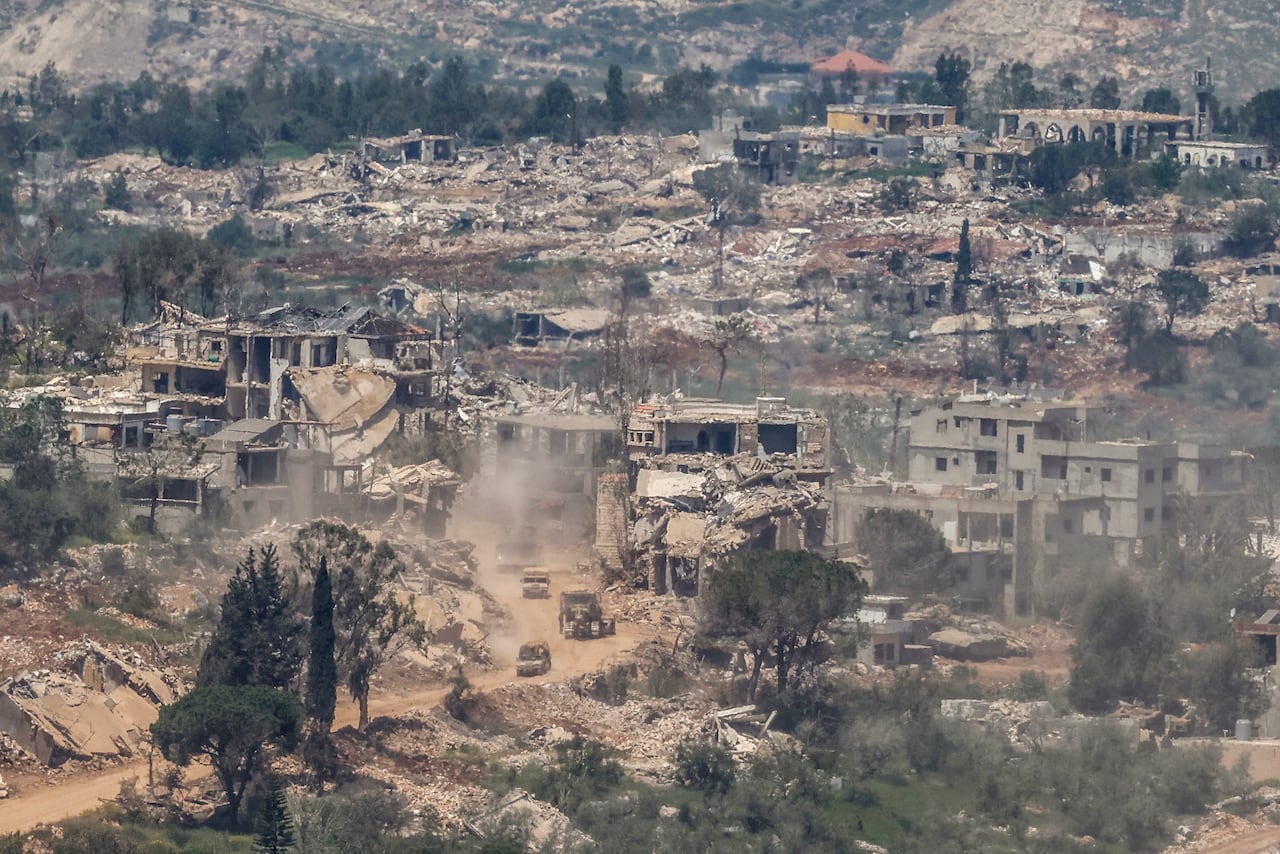
This photograph taken from northern Israel shows Israeli military vehicles traveling along the road between destroyed homes in southern Lebanon near the border with Israel, on Monday. (Jalaa Marey/AFP/Getty Images)
Weekend violence in Lebanon
Violence has escalated in Lebanon, where Israeli airstrikes resulted in the deaths of 14 individuals and injuries to 37 others in the south on Sunday, as reported by the Health Ministry, marking the deadliest day since a ceasefire brokered by the U.S. was established in mid-April.
Iran has stated it will not engage in talks regarding the broader conflict unless a ceasefire is also maintained in Lebanon, which Israel invaded in March in pursuit of the Iran-supported group Hezbollah, which has launched attacks across the border in support of Tehran.
Israel and Hezbollah have accused each other of breaching the ceasefire, which was negotiated between Israel and the Lebanese government in Washington and extended last week.
