
This year, Karla Frey faced challenges completing her annual ofrenda at her residence in Boucherville, Quebec.
Tragedy struck two months ago when her five-year-old neighbor and his mother lost their lives in a car accident.
Recounting how the young boy would visit her yearly, intrigued by her ofrenda – a tribute altar she has been assembling for 15 years to honor departed loved ones – Frey was deeply affected by the mother and son’s passing.
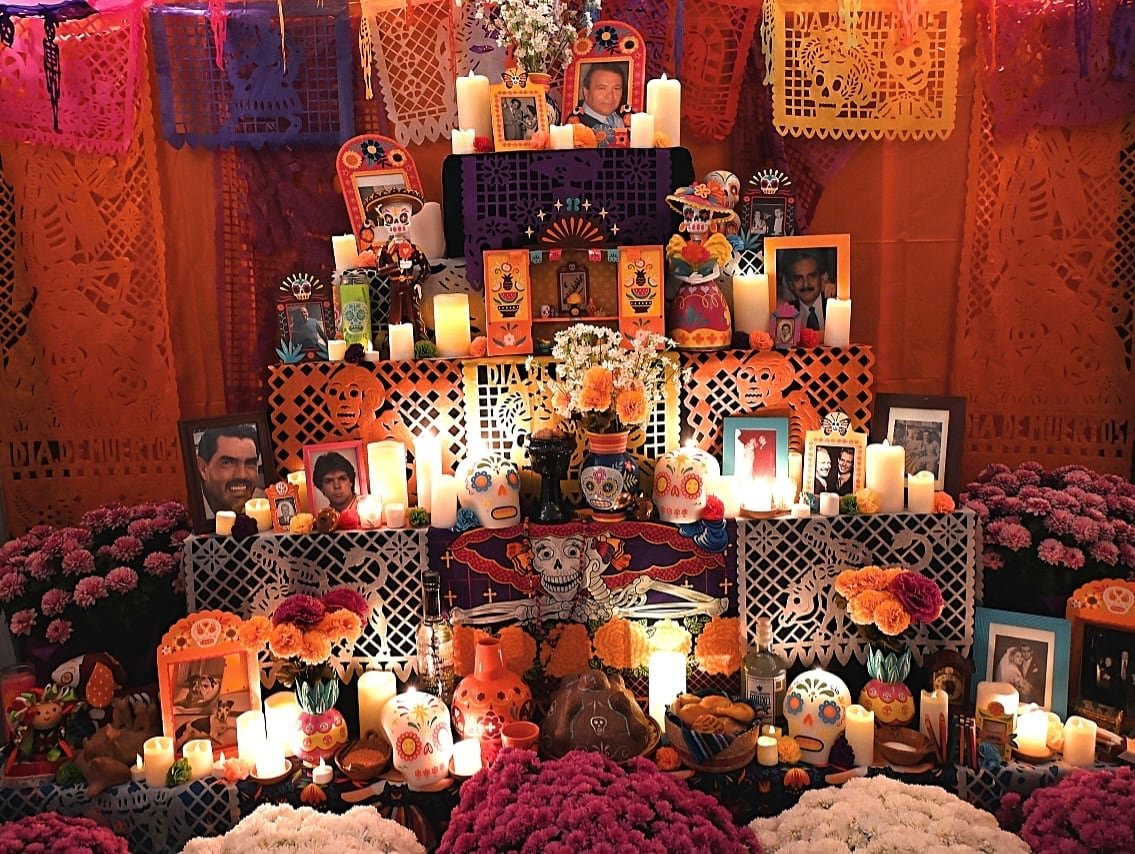
Despite the heaviness of the situation, she persevered and finalized the altar setup, placing picture frames, candles, a symbolic bread called pan de muerto, colorful cut paper, mezcal, tequila, and Mexican marigolds known as cempasúchil.
“I thought about how much the little neighbor enjoyed life. He appreciated my ofrenda, so I dedicated it a bit to him and his mother,” shared Frey, gazing at a photo of the pair atop the altar, adorned with a hovering heart.
This year, the inquisitive five-year-old will be remembered in a different way by Frey.
“Seeing the completed ofrenda with them there makes me feel content. I am happy,” expressed Frey.
El Día de Muertos, or Day of the Dead, is a multi-day festivity observed from late October to early November, deeply rooted in Indigenous customs and widely celebrated across Mexico.
During this period, people pay homage to deceased family members, friends, children, and even pets through reflection, celebration, and ornamentation of graves, cemeteries, streets, and homes. They revive the departed through memories, affection, and vibrant hues, welcoming the spirits of the deceased.
In Quebec, the Mexican community carries forward these ancestral practices with reverence.
For Frey, who had not previously observed Día de Muertos while residing in Mexico City, the occasion serves not only as a means to reconnect with her departed loved ones but also as a link between Quebec and her native land.
Coping with Loss through Celebrating Life’s Memories
Annually, Frey hosts friends at her home to share recollections of their departed loved ones.
She includes mezcal, water, and tequila on her altar, explaining that the deceased arrive thirsty and that the aroma of copal incense and photographs guides them to the correct altar.
Frey stresses the significance of remembering the departed, as failing to do so equates to their second demise – this time through sadness.
Expressing her emotions through the ofrendas over the years facilitated her acceptance of her father’s passing. To her, it is an “opportunity for an exchange.”
“It’s not just emotional, it’s also visual,” she remarked. “I believe it’s essential for people to witness the absence of the individual.”
Following years of participating in Day of the Dead festivities, the holiday took on a new significance for Gerardo Familiar Ferrer after experiencing it with his Indigenous companions in the mountains of Oaxaca, a state in southern Mexico renowned for its rich Indigenous heritage.
“This experience truly altered my perspective on the Day of the Dead, and I now hold a deeper respect for the tradition,” Familiar Ferrer shared.
At his residence in Gatineau, Quebec, Familiar Ferrer’s altar features a small box containing the names of departed loved ones, including his maternal grandmother.
His profound understanding of the customs has empowered him to introduce Día de Muertos
