
Indeed, your vision is not misleading — gas prices are decreasing throughout Canada.
As of Thursday, the national average price for gasoline in Canada was $1.514 per litre, according to the price monitoring website affordableenergy.ca. This figure reflects a decline of approximately seven cents compared to the previous week and is about 28 cents lower than the national average from 30 days prior, based on the tracking site’s data.
In regions such as Manitoba and Saskatchewan, average prices have plummeted by over 30 cents compared to last month’s averages, as noted by GasBuddy petroleum analyst Patrick De Haan.
“In fact, some gas stations in Calgary are now offering prices below a dollar a litre once again,” De Haan remarked.
He anticipates that prices might drop an additional five to ten cents per litre nationwide in the coming weeks, provided there are no new escalations related to the U.S. conflict in Iran, which has previously severely restricted traffic through the crucial Strait of Hormuz, causing oil prices to surge.
Although current gas prices remain higher than those from a year ago, they have recently decreased primarily due to increased oil traffic through the strait and various seasonal influences, according to analysts.
Tanker movement through the strait has increased in recent months, <u supported by U.S. military escorts, according to Al Salazar, who leads oil and gas research at Enverus. This rise in tanker traffic has contributed to a decrease in crude oil prices, with the cost of a barrel of Brent crude now just under $92 US, down from approximately $116 US at its peak in mid-October.
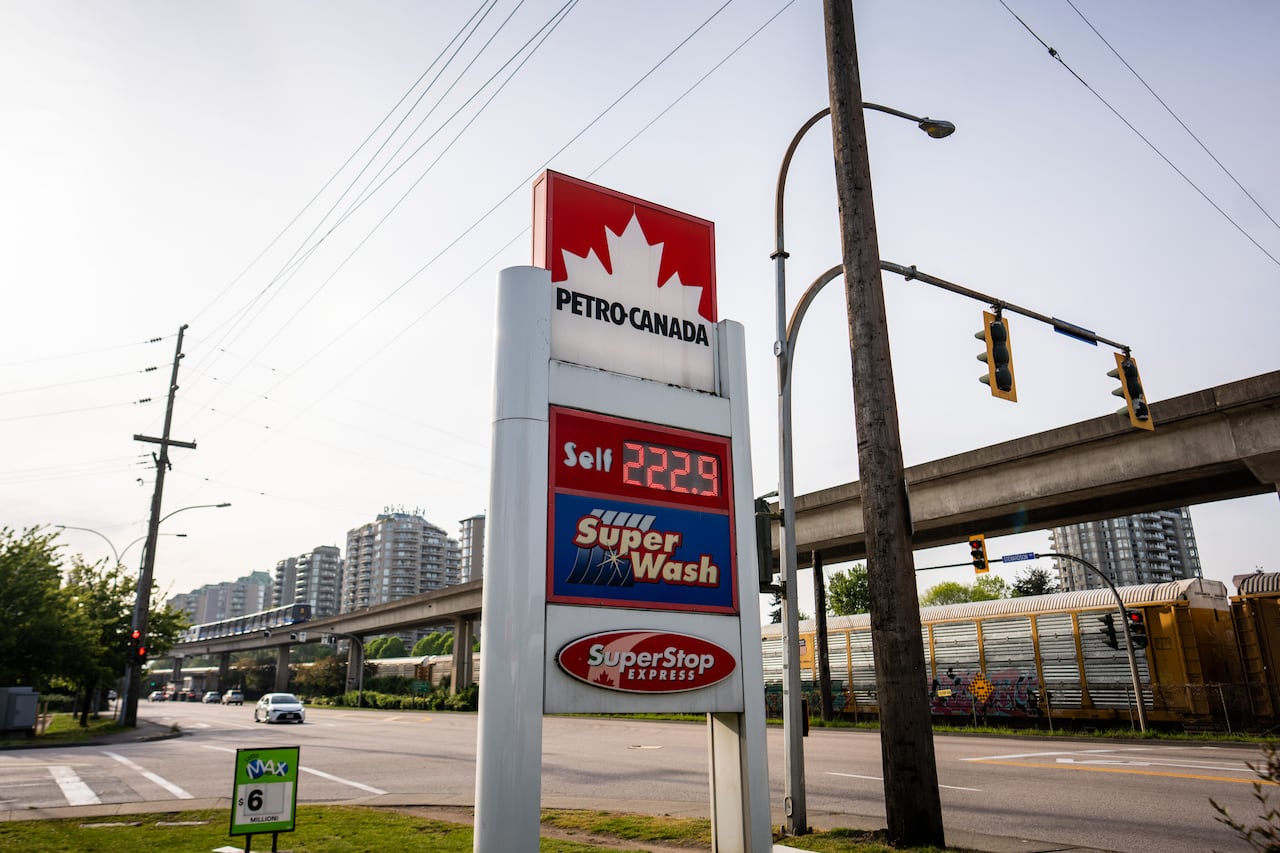
Gas prices are displayed at 222.9¢ a litre at a gas station in New Westminster, B.C., on May 1. The oil crisis triggered by the situation in Iran has caused gas prices to rise significantly in recent months, sometimes exceeding $2 a litre. (Ben Nelms/CBC)
“Before the midterms, the U.S. military was actively supporting and protecting vessels traveling through the strait. This has resulted in a bit of an oversupply,” Salazar explained.
The International Energy Agency also indicated last week that the global oil market might see a surplus in the fourth quarter due to increased oil exports from the Middle East.
Meanwhile, U.S. President Donald Trump has adopted a more conciliatory approach regarding the conflict, and expectations have risen that Democrats may leverage their newfound influence from the midterms to prevent further military action against Iran, which could encourage a further decline in oil prices, Salazar stated.
Seasonal trends are also providing the industry with considerable “breathing space,” De Haan noted.
The transition to the less expensive “winter blend” gasoline has begun, and refinery maintenance linked to this change is nearing completion. Maintenance work at the Irving Oil facility in New Brunswick was expected to wrap up yesterday, while De Haan adds that increased output at refineries in the prairies is contributing to significant price drops at the pump in Manitoba and Saskatchewan.
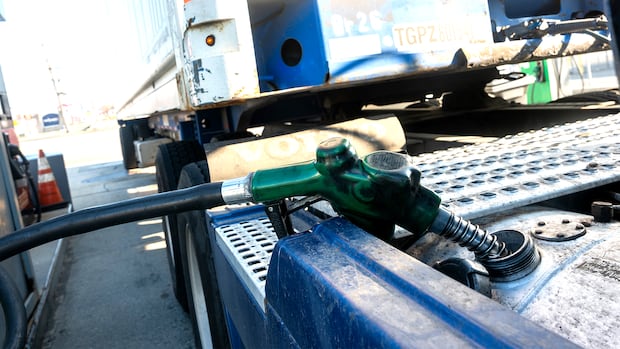
Crude oil exports through the Strait of Hormuz are gradually recuperating, so why is the price of diesel soaring? The National’s Eli Glasner elaborates on the factors driving the increase and why diesel prices may not decrease soon.
Additionally, Canadians typically drive less during the winter months as they stay indoors during colder weather, which helps to reduce demand.
Although the price of diesel — which has impacted sectors such as trucking, agriculture, and fishing — has also decreased, relief on this front may be more temporary, according to Dan McTeague, president of the Canadians for Affordable Energy advocacy group.
Diesel is akin to jet fuel and home heating oil — and the latter will see increased demand as temperatures decrease in the winter, McTeague stated.
“[With] diesel, this is likely the best we can expect by the end of this week,” he told CBC’s Hanomansing Live earlier this week.
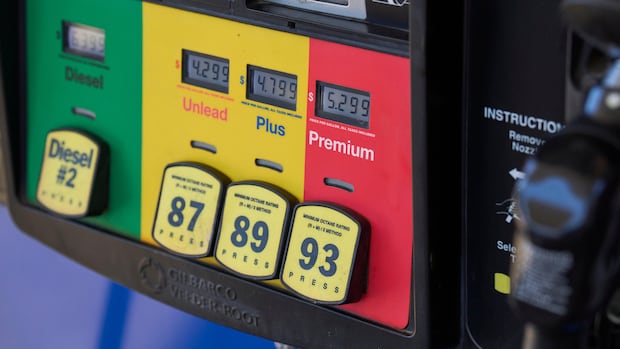
Dan McTeague believes the recent decline in gas prices is a result of a period of geopolitical stability, as no significant attacks have occurred against critical energy infrastructure in Iran or Ukraine. He anticipates that this drop will persist for some time; however, he does not foresee a reduction in food prices until overall energy and input costs decline.
De Haan forecasts that the lower gasoline prices may continue into early 2027 but warns that part of this “artificial decrease” will vanish when the halted fuel excise tax is reinstated. The tax is set to return at a 50 percent rate at the end of January 2027 before reverting to its full amount by the end of March.
Both De Haan and Salazar caution that prices could rise again if tensions escalate with Iran. Especially with recent strikes on vessels in the strait, Salazar predicts that the relief at the gas pumps might be short-lived.
“This is indeed a war signal. It appears there’s no sustainable solution to deter Iranian attacks on ships,” Salazar remarked.
“So seize the temporary dip in prices while you can, but I suspect we will see higher prices again soon.”
