
During a press event in May, Telus’s former CEO Darren Entwistle made an intriguing forecast regarding two new AI data centers slated for Vancouver.
“They’re going to be incredibly appealing,” he remarked with a smile, as he confirmed a collaboration with developer Westbank Corp.
However, the endeavor turned out to be more of a brief romance.
This week, the telecommunications company announced it would be withdrawing from both projects.
“Telus has chosen not to move forward with co-developing two previously announced Vancouver data centers alongside Westbank,” a representative stated, noting that the firm would instead concentrate on enhancing an existing data center in Kamloops, B.C.
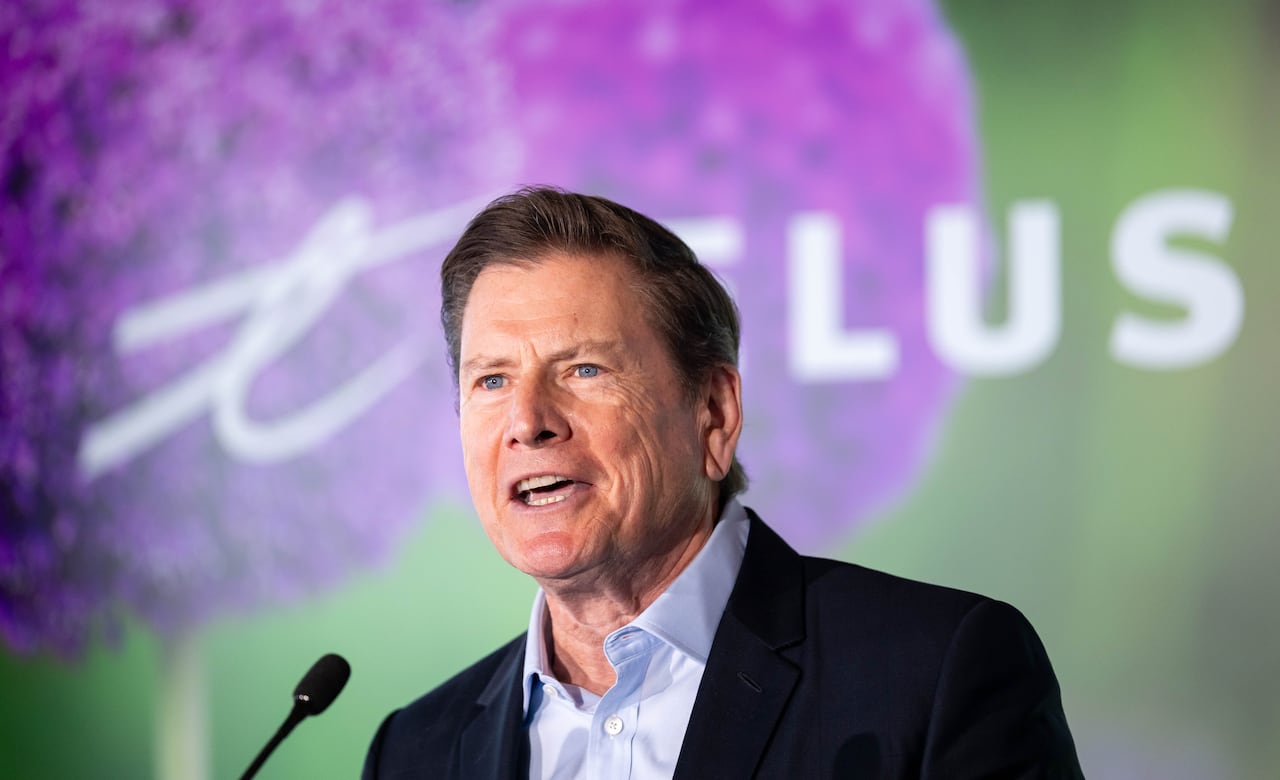
Former TELUS CEO Darren Entwistle, addressing the audience in Vancouver in May, expressed that the new A.I. data centers would be ‘incredibly appealing.’ (Ethan Cairns/CBC)
Westbank, on the other hand, seems unfazed.
In a statement, a spokesperson revealed that they had already secured a new partner for the projects.
“We are moving forward with the initiatives as planned, with a new partnership to be announced in the upcoming months,” the company stated.

The first of the two centers, which was to be an office building previously occupied by Hootsuite in the Mount Pleasant area, was scheduled to be operational by the end of the year.
A second facility located on West Georgia Street in the downtown region was anticipated to open in 2029.
Telus has not provided any rationale for its decision to withdraw, leading to various speculations.
“I suspect that Telus is wary about potential reputational risks,” stated Vancouver Coun. Lucy Maloney.
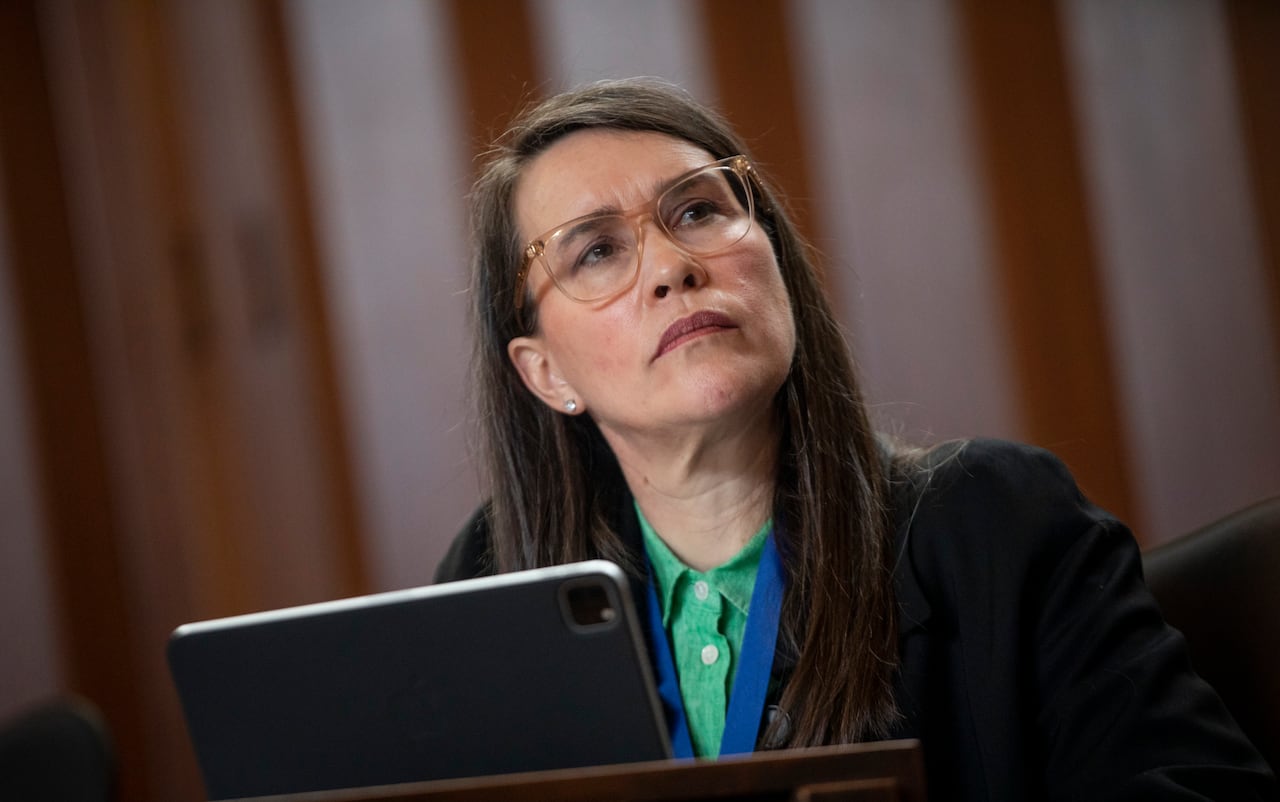
Vancouver Coun. Lucy Maloney believes Telus is concerned about its reputation. (Ben Nelms/CBC)
“I’m sure they are evaluating the return on investment against the complexities of addressing public concerns regarding AI.”
The newly elected council in Vancouver is scheduled to review and discuss a motion from Maloney aimed at tightening the approval processes for AI data centers during a meeting this week.
“All I am requesting from the staff is to assist in recommending an appropriate and robust regulatory framework to provide the necessary information for assessing rezoning applications for AI data centers,” she explained.
“We understand that AI data centers can have significant impacts compared to other industrial and commercial activities.”
The motion did not gain support when previously introduced to the former council, but Maloney remains optimistic that the newly elected group from October will be more receptive.
“I anticipate greater success,” she expressed.
“It is widely recognized that the motto of Silicon Valley is to act swiftly and disrupt, but that is certainly not an appropriate mindset for any governmental regulator or governing body.”
‘A lot of uncertainty’
The grassroots protest organization No AI Vancouver has been instrumental in mobilizing opposition to the data centers, contending that they lack sufficient regulation and are being expedited without proper community engagement.
The group organized multiple protest activities throughout the city over the course of 2026, with some events drawing hundreds of demonstrators.
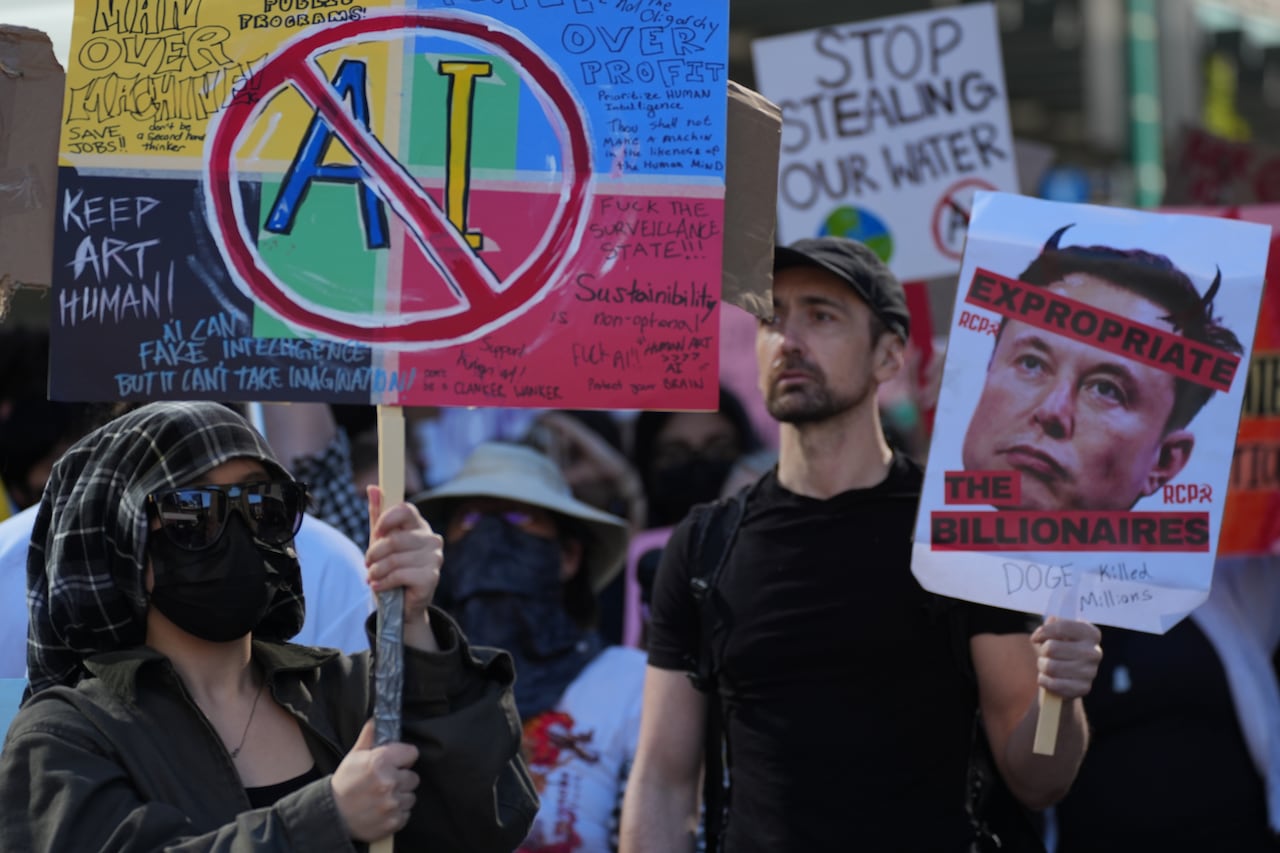
Hundreds of individuals have taken to the streets in Vancouver this year to protest proposed AI data centers. (Avery Woods/CBC)
Organizer Guerric Haché believes that the public’s pushback is affecting the decision-making of firms like Telus.
“You witnessed numerous protests in the streets, people composing letters. There were stickers plastered all over the city,” he remarked.
“There’s significant resistance against AI, and that seems to be on the rise. There’s also growing concern regarding the stability of the market. Is it a bubble? Is it poised to collapse? There’s a great deal of uncertainty.”
This uncertainty also applies to Telus.
Montreal-based Quebecor has submitted a $31-billion acquisition proposal, which would form a company with a market capitalization surpassing that of competitors Rogers and Bell.
Telus has stated that it is currently reviewing the offer, which is also subject to assessment by the Competition Bureau and the Canadian Radio-television and Telecommunications Commission.
