
In the second grade, Jasper Fleming discovered his “superpower.”
The young man from Edmonton had struggled with anxiety during the preceding two school years, finding it difficult to read and write at the same level as his classmates.
This was not due to a lack of intelligence — his parents, Lise and Aric, describe him as exceptionally articulate — which only heightened his anxiety.
Towards the end of that school year, Fleming received a diagnosis: he had severe dyslexia.
This diagnosis was a relief for Fleming: “it was nice to put a name to [it],” he remarked. Armed with this knowledge, he could approach life with a new perspective. He enrolled in a complimentary program called Right To Learn, funded by the Free Masons, in its inaugural year, where he received tutoring twice a week after school.
“Through that, I rewired my brain in a way that allowed me to see the world in a completely different perspective. So it doesn’t just happen with reading and cognition,” Fleming stated.
“Everything I do in this world revolves around dyslexia, which is, I believe, the greatest superpower I’ve ever had in my life.”
Now, more than ten years later, Fleming’s passion lies in biathlon — and he has his eyes set on the Milan-Cortina 2026 Olympics.
At 20 years old, he aspires to be only the second Canadian biathlete to win an Olympic medal, following in the footsteps of Myriam Bedard, who secured three medals — two gold and one bronze — at the 1992 and 1994 Olympics.
However, even Fleming didn’t anticipate that this dream could materialize as early as this February.
“It’s unbelievable to me that I began with this extensive list of goals when I was nine. I thought, ‘Oh, I want to make the national team one day, win national medals, and go to the Olympics,’” Fleming explained.
“And here I am, telling you this 11 years later, and it’s all within reach. Most of it has come true. I just have a few more boxes to check off, which is astonishing.”
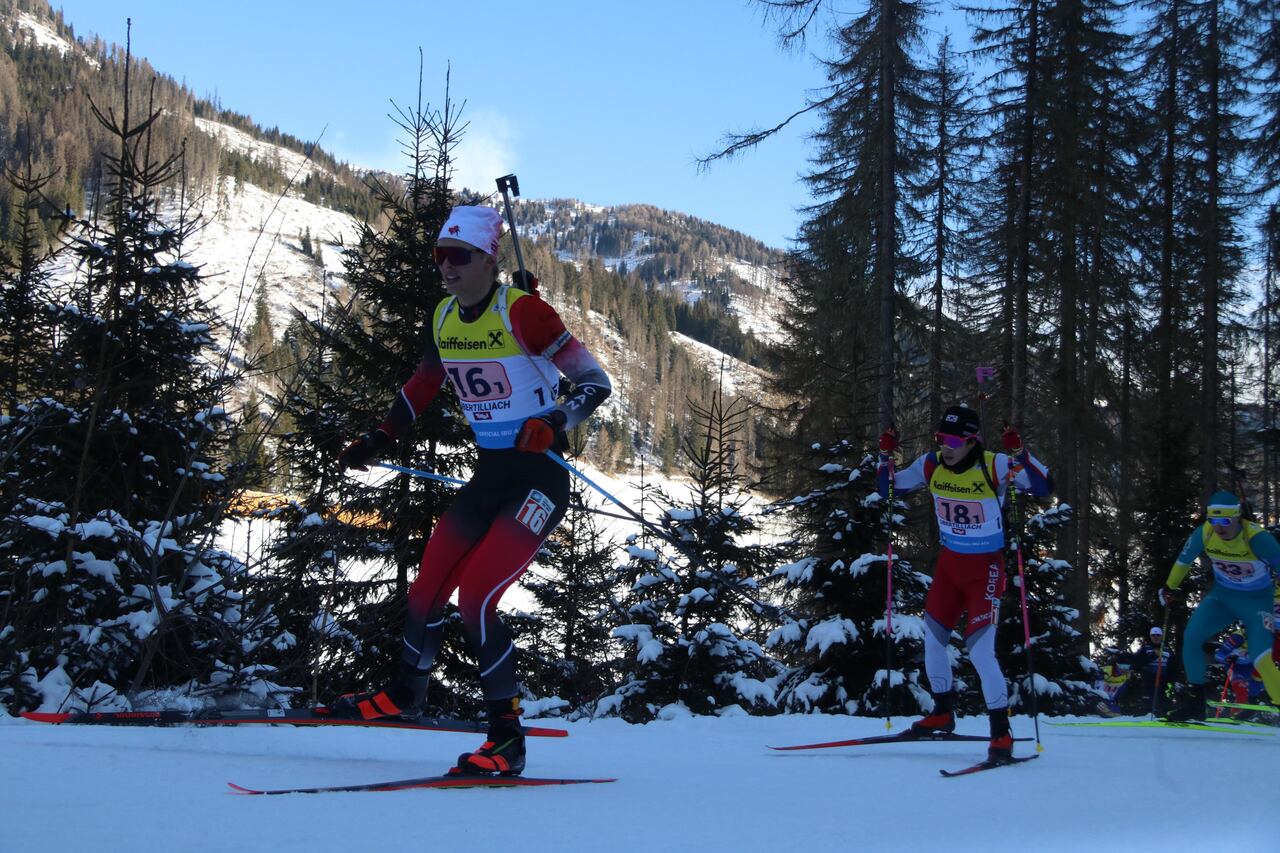
Fleming competes in a race against a mountain backdrop. (Submitted by Jasper Fleming)
Olympic aspirations
This year marks Fleming’s debut season on the senior World Cup circuit, which commences Saturday in Oestersund, Sweden.
Last season, he participated in six World Cup events, including two in Antholtz, Italy, which will also host the 2026 Olympics. During that time, he contributed to Canada finishing 18th in the relay while placing 95th (third among Canadians) in the individual men’s 10-kilometre race.
Canada plans to send four male biathletes to the Olympics, with the positions still being contested.
For Fleming, simply qualifying for the Olympics — let alone winning a medal — would be an added bonus for an athlete who is primarily eyeing podium finishes in 2030 and 2034.
“I’m in this for the long haul, hopefully. My ultimate aim is to win Olympic medals. I won’t sugarcoat it; that’s my goal,” said Fleming, who is also the reigning national junior champion.
His dream ignited when he was nine years old in Edmonton. Just a few years prior, he had felt lost, unable to comprehend what was hindering his academic progress.
“He was a really bright kid, very sociable, and desperately wanted to fit in with the other children, but school caused him significant stress, leading to anxiety. It made him doubt his abilities and intelligence,” recalled his mother, Lise.
“One day he told me — and it was truly heartbreaking — he said, ‘Mom, I hate my brain.’”
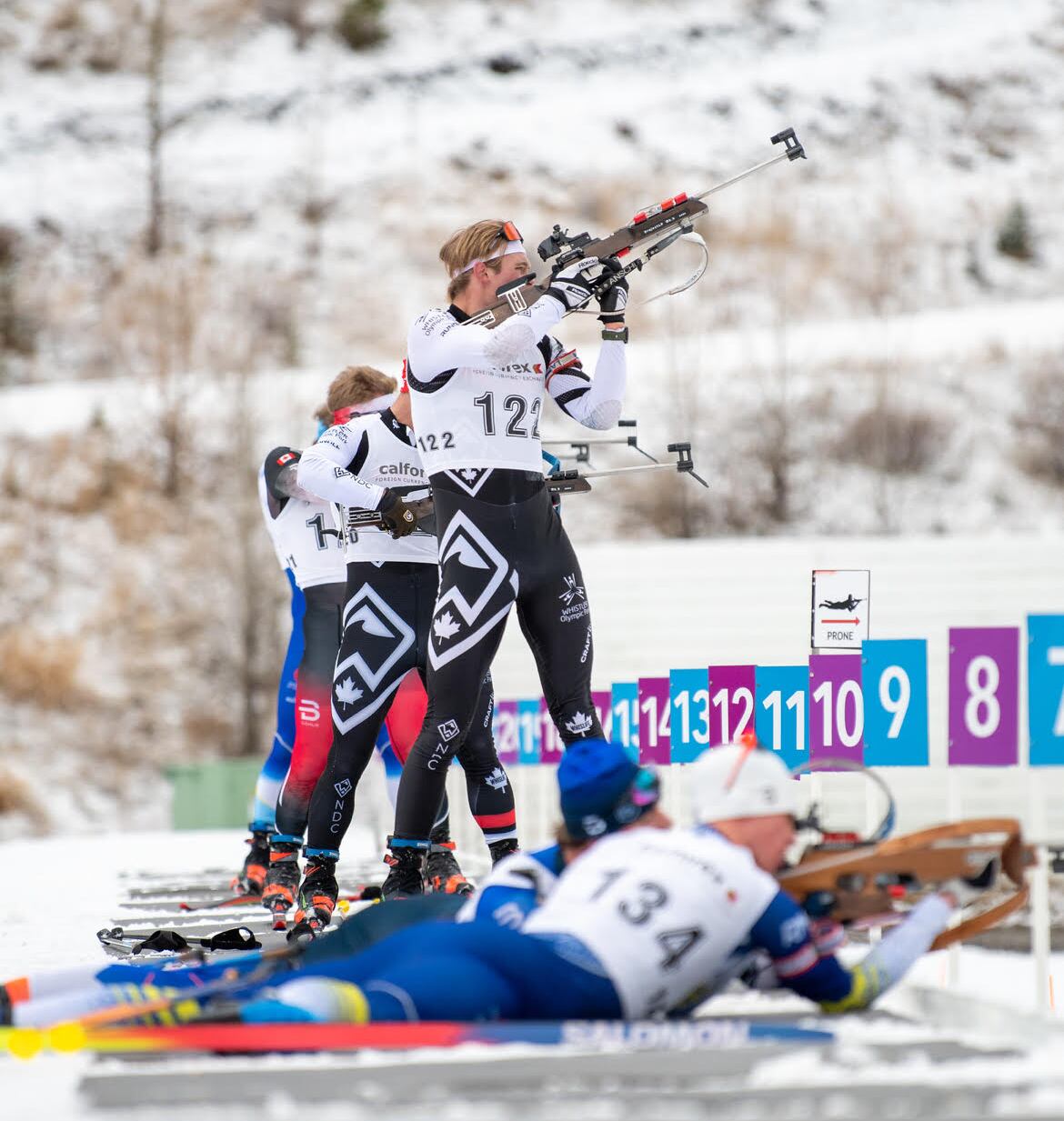
Fleming prepares to shoot a rifle in competition. (Submitted by Jasper Fleming)
However, through tutoring and sports, Fleming’s confidence began to flourish. He had participated in cross-country skiing for several years, but it was when he first tried skate skiing that he truly fell in love with the sport.
“He built a track that connected our front yard to the backyard, going through the gate of our house. It was minus-20, maybe even minus-25 in Edmonton, and he spent hours circling around that track,” Lise reminisced.
Additionally, his Christmas wish for a complete Olympic kit from The Bay became a regular occurrence.
“He would gather his cousins and younger brother to pretend they were in the Olympics, and we would hold a medal ceremony. The Canadian anthem would play, and everyone would stand on their podiums. Since he was the oldest, he often received the gold medal,” Lise shared.
The Sochi Olympics captured Fleming’s attention to the extent that he penned a fan letter to Nathan Smith, a biathlete who competed for Canada at those Games.
Smith responded, further igniting Fleming’s Olympic aspirations.
‘Finally found my place’
The Fleming family committed fully to this journey, relocating to Squamish, B.C., in 2018. They now reside just 45 minutes from the 2010 Olympic facility where Jasper trains.
“You don’t often think about it, but it becomes routine to ski right under the Olympic rings every day,” he remarked.
Biathlon isn’t Fleming’s only pursuit — he also takes mountain biking and downhill skiing seriously, which are additional advantages of living near the 2010 Olympic site.
He recognizes that biathlon isn’t as popular as hockey in Canada. At some point, perhaps soon, he will need to decide whether this lifestyle is financially viable.
But for the moment, biathlon continues to captivate Fleming.
“These two sports [cross-country skiing and shooting] seem unrelated, yet they create an exciting and unique combination,” he explained.
Both Lise and Jasper identified the most significant challenge in biathlon as managing heart rate — athletes must exert themselves fully during sprints and then maintain precise aim while shooting at targets.
A single missed shot could jeopardize the entire competition.
Fleming thrives in such conditions.
“I’ve never encountered anyone like him before. He’s my child, yet I find his routine fascinating,” Lise stated. “He thrives on routine, and his brain operates best when he has that structure.”
He attributes that enhanced focus as the driving force behind his motivation in sports, which also became a vital outlet for him.
“I enjoy that routine. I wake up every day knowing what I need to accomplish,” he said. “In many ways, that has aided my athletic career and provided me with something to look forward to.”
Consequently, it has also given Canadians something to anticipate. While it may not happen in 2026, a biathlon medal — the nation’s first in decades — could be on the horizon.
“I can confidently say that I feel I belong, which is something I’ve been struggling to find on the international stage for a while,” Fleming expressed.
“Now, I truly feel that I have finally found my place.”
