
The Alberta administration is set to introduce new subsidies for oil firms later this month, aimed at boosting production to support the province’s planned Pacific Link pipeline to the West Coast.
These incentives arrive as the largest oil producers report billions in profits from their most recent financial statements, marking one of the industry’s most profitable years in over a decade.
Recently, Suncor Energy, Cenovus Energy, Canadian Natural Resources, and Imperial Oil collectively reported profits exceeding $12.5 billion in their quarterly earnings. The Canadian oil and gas sector is projected to generate over $200 billion in revenue by 2026, as oil prices surged above $100 US per barrel multiple times this year due to the U.S.-Iran conflict.
This has led some industry analysts to question the necessity of new subsidies.
Janet Annesley, a former executive at Husky Energy and Shell Canada, expressed her doubts on CBC Radio’s Alberta at Noon, stating, “What kind of incentives does the oil and gas sector really need?”
She further questioned, “They’ve got money, they’re buying back shares, they’re distributing substantial dividends to shareholders. So what more do we Albertans need to do to encourage them to invest here and initiate more projects?”
Annesley noted that Premier Danielle Smith will need to “make a case to Albertans about why we should be offering additional incentives to oil companies.”
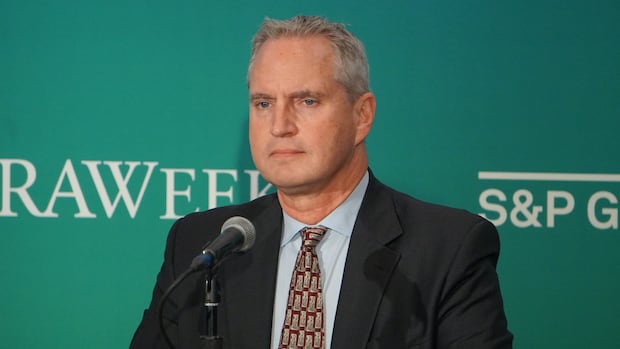
Former Suncor chief executive Mark Little explains why shareholders of oilsands companies may have little incentive to support spending tens of billion of dollars on new production facilities. Currently, the Alberta government is developing an incentive program to encourage companies to increase production.
While oil production is already at unprecedented levels, uncertainty remains regarding whether the industry can generate sufficient crude to warrant starting construction on the numerous new and expanded pipeline projects currently underway, particularly the Pacific Link, which Smith aims to commence construction on by fall 2027.
According to Smith, the province is working on establishing an “alternative enhanced royalty structure” to motivate companies to boost oil production.
She mentioned to reporters in Fort McMurray, Alta., in September, “We anticipate that once this proposal is presented and they understand the factors involved, there will likely be a significant interest in filling that pipeline.”
Increased oil demand
The forthcoming subsidy is projected to focus on the oilsands sector, which is the primary contributor to the province’s oil production, with new projects typically large enough to significantly elevate overall production levels.
The Alberta government is already offering financial incentives to oilsands companies for new projects since they pay considerably lower royalties to the government during the initial years of operation.
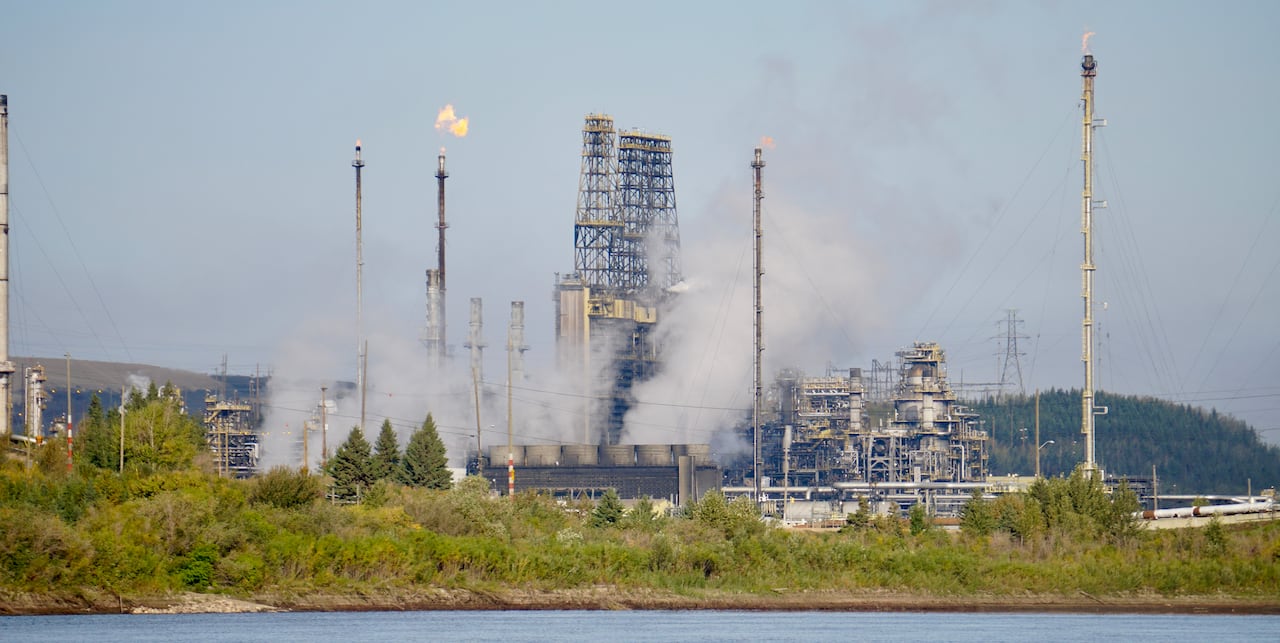
A view of Suncor’s Base Plant oilsands mine. Suncor is one of the companies considering whether to proceed with expanding production in the oilsands. (Kyle Bakx/CBC)
Some companies are already suggesting they may expedite their plans to initiate new projects.
Imperial Oil is contemplating advancing its Aspen oilsands project, initially expected by the end of the decade, with CEO John Whelan indicating it could happen sooner.
“We are evaluating whether we want to move it forward,” he stated during an analyst conference call on Oct. 30, acknowledging the company’s optimism regarding the provincial and federal governments’ support for the sector.
Suncor executives are also reviewing their growth strategies for the upcoming years, contemplating how they might accelerate their plans if they choose to, according to CEO Rich Kruger.
“We’re asking ourselves and conducting some initial assessments,” he mentioned during a conference call with analysts on Nov. 4.
“We are all eagerly awaiting further information from the province regarding royalties and incentives. All parties are engaged, collaborating intensively.”
The Oil Sands Alliance refrained from commenting on the proposed Alberta incentives until an official announcement is made.
Setting a timeline
Some oil firms might be hinting at potential growth plans to attract investor interest. Despite high oil prices, many investors prefer that companies continue generating substantial profits for shareholders rather than investing billions in new projects.
Mark Little, former CEO of Suncor, noted that many investors are benefiting from significant profits and are hesitant to forfeit the cash they receive.
According to Little, company leaders are “testing investors’ willingness for expansion” to determine if they will back growth initiatives or advise against them.
“To me, the greatest uncertainty regarding growth isn’t the [federal government], it’s not the province, it’s not funding,” he stated, “It’s whether the investors will support it.”
The last major oilsands project was launched nearly ten years ago, prompting Little to emphasize the importance of investing in the industry to ensure its long-term viability.
“I often refer to it as the ‘liquidation phase’ because our focus has solely been on production, minimizing spending, and returning cash to shareholders,” he remarked.
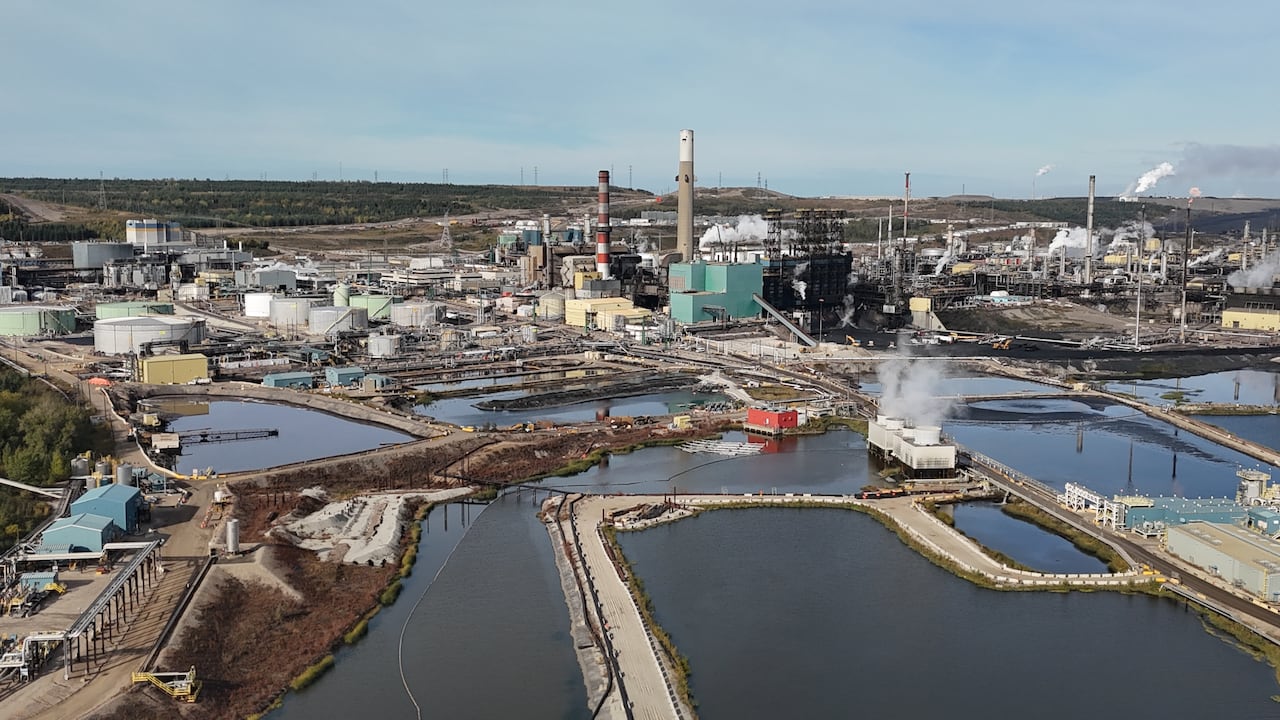
An aerial view of an oilsands mine north of Fort McMurray, Alta. Oil production continues to increase as companies expand and improve existing facilities. (Bob Grieve/CBC)
Little described the Alberta government’s decision to propose a new incentive as “puzzling,” given the existing royalty system’s complexity, adaptability, and effectiveness. Nevertheless, he suggested that implementing a deadline for companies to develop their owned properties could be beneficial.
Production from the oilsands continues to rise as companies invest in expansion and seek improvements in their operations.
Lennie Kaplan, a former senior manager with the Treasury Board, estimates that some form of incentives are essential for companies to invest billions in new large-scale oilsands projects.
“These initiatives require substantial capital investment,” he stated regarding the financial commitment needed.
-
Ottawa wants to expand the oilsands, but the industry’s wastewater problem will grow with it
-
First Nations challenging Pacific Link pipeline’s national-interest designation
To achieve its objective of doubling oil production, the Alberta government, according to Kaplan’s analysis, would need to allocate $115 billion in incentives between 2027 and 2050, which includes $95 billion in royalty reductions and an additional $18 billion in construction subsidies. In a scenario of stable oil prices, as projected by Alberta Energy, the government could garner an extra $250 billion in royalties.
Conversely, if oil prices were to drop, the government might require $240 billion in incentives, potentially resulting in a net fiscal deficit of $80 billion.
Kaplan’s analysis also considers other factors, such as an increasing industrial carbon tax, which is significant as the Alberta government remains committed to achieving net-zero emissions by 2050.
