
On Friday, the U.S. military reported that its 20th assault on a vessel suspected of drug trafficking resulted in the deaths of four individuals in the Caribbean Sea. This strike represents an intensification of the Trump administration’s operations in South American waters.
The most recent attack occurred on Monday, as revealed in a post on social media by U.S. Southern Command on Friday. This brings the total fatalities from these military actions, which commenced in September, to 80. Additionally, the Mexican Navy has halted its search for a survivor from an October strike after four days of efforts.
In a post on X, Southern Command shared a video of a boat racing across the water before being engulfed in flames. According to the command, intelligence indicated that the vessel “was engaged in illicit narcotics smuggling, traveling along a recognized narco-trafficking route, and carrying narcotics.”
This post from Southern Command indicates a departure from the usual practice of U.S. Defence Secretary Pete Hegseth announcing the strikes on social media, although he promptly shared Southern Command’s announcement.
Simultaneously, the Trump administration is augmenting the already substantial U.S. military presence in the region by deploying the USS Gerald R. Ford aircraft carrier. This advanced warship is anticipated to arrive shortly after traveling from the Mediterranean Sea.
On Thursday, Hegseth officially designated the mission as Operation Southern Spear, highlighting the increasing importance and permanence of military operations in the area. Once the Ford reaches the region, the mission will involve nearly a dozen U.S. Navy ships along with approximately 12,000 sailors and Marines.
-
Victims ‘executed’ in Venezuela, labeled narco-terrorists by Trump administration, mourned by family
The Trump administration asserts that the increase in naval vessels aims to curb the influx of drugs into the U.S., yet it has provided no proof to back its claims that those killed in the strikes were “narcoterrorists.”
The attacks have primarily targeted boats in the Caribbean Sea, but there have also been incidents in the eastern Pacific Ocean, which is a major route for cocaine smuggling from leading producers.
An Intimidation Strategy Against Maduro?
Some analysts believe that the aircraft carrier serves as a significant tool of intimidation directed at Venezuelan President Nicolás Maduro, who faces narcoterrorism charges in the U.S.
Experts are divided on whether American warplanes might strike land targets as a means to compel Maduro to resign.
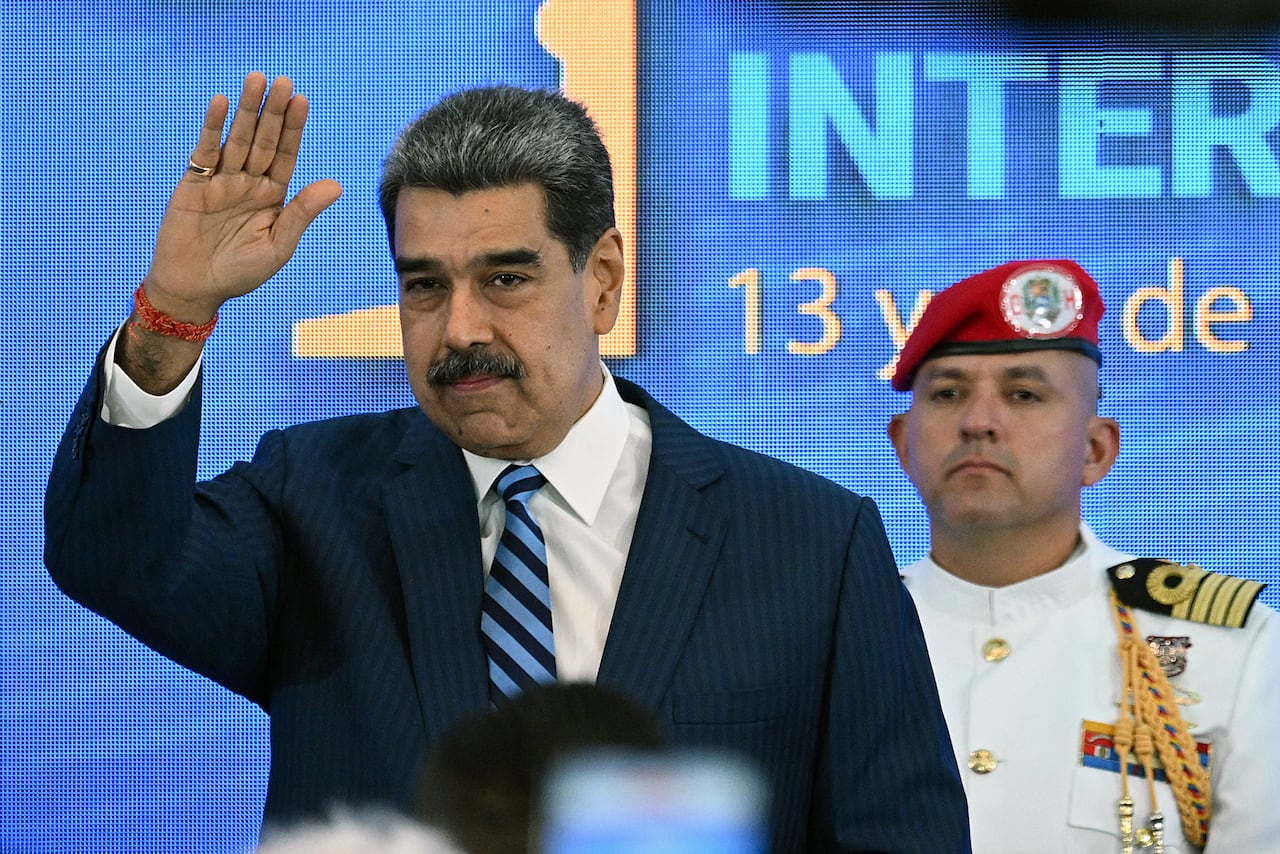
Venezuelan President Nicolás Maduro waves during a meeting in Caracas on Friday. (Federico Parra/AFP/Getty Images)
U.S. Secretary of State Marco Rubio stated that the U.S. does not recognize Maduro, who is widely accused of having rigged last year’s election, as the legitimate leader of Venezuela and has labeled his government as a “trans-shipment organization” that collaborates openly with drug traffickers targeting the U.S.
In response, Maduro has claimed that the U.S. government is “fabricating” a conflict against him. This week, the Venezuelan administration promoted a “massive” mobilization of troops and civilians to prepare for potential U.S. attacks.
Trump has defended these assaults by declaring that the United States is in an “armed conflict” with drug cartels, insisting that the vessels are operated by foreign terrorist organizations inundating American cities with drugs.
Lawmakers, including members of the Republican Party, have called for more details regarding the targets and the legal basis for these strikes.
Last week, Rubio and Hegseth met with a bipartisan group of lawmakers overseeing national security matters, offering one of the first insights into the legal justifications and strategic approach behind the attacks.
The day after, Senate Republicans voted against legislation that would have restricted Trump’s ability to initiate an attack on Venezuela without congressional consent.
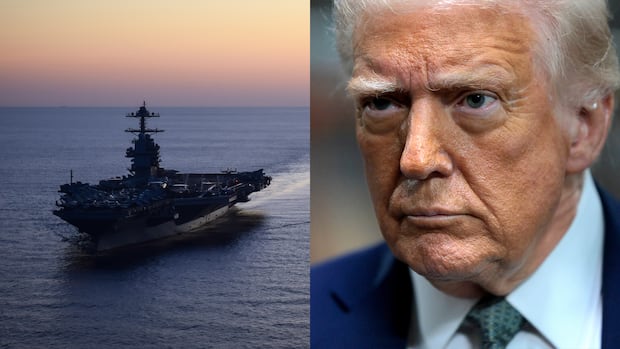
Following a series of strikes on alleged ‘narco traffickers’ off Venezuela, the U.S. has deployed its largest aircraft carrier to the region. For The National, CBC’s Eli Glasner discusses why President Trump’s display of force may extend well beyond the fight against drugs.
Tag: rewrite-pending
