
Consumers seeking to assess their residence’s radon levels now have numerous radon monitors available for purchase both online and in retail outlets. However, experts caution that many of these monitors are ineffective.
Pam Warkentin, the executive director of the Canadian Association of Radon Scientists and Technologists (CARST), emphasized that several Canadians unknowingly use uncertified or unapproved monitors. She highlighted instances where individuals had to buy new monitors after discovering the inadequacy of their initial devices.
Utilizing faulty monitors can lead to financial and time wastage as electronic monitors are costly, and testing typically spans a minimum of three months. Warkentin recounted a case where a homeowner bought monitors for himself and his family, only to realize later that they had been recalled, rendering the months of monitoring pointless.
These substandard devices pose a significant public health threat by providing inaccurate readings, potentially deterring residents from mitigating radon exposure, a hazardous gas linked to lung cancer. Studies suggest that millions of Canadian households may have elevated radon levels, with radon-related lung cancer claiming around 3,200 lives annually.
Warkentin cautioned that individuals might trust misleading low readings from monitors, potentially undermining necessary actions to reduce radon exposure.
To conduct a reliable radon test at home and avoid unreliable monitors, Health Canada recommends testing for a minimum of three months, preferably during winter when homes are sealed, optimizing radon detection.
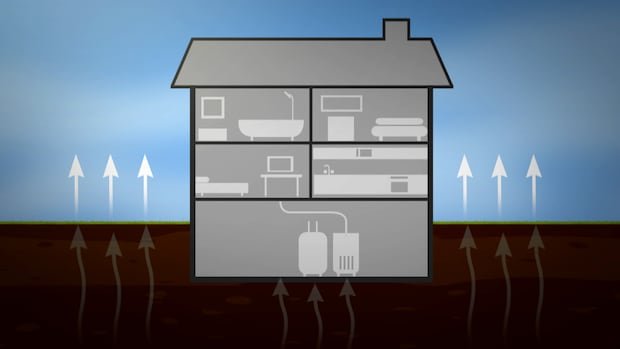
Proper Radon Testing Methods
For long-term radon testing, individuals can hire professionals or purchase test kits. While some communities offer free monitors, most homeowners acquire their own devices, ranging from passive trackers to electronic monitors with real-time display capabilities.
Warkentin highlighted the issue of unreliable devices providing inaccurate “false low” readings that fail to reflect actual radon levels within homes.
Health Canada’s radon lab in Ottawa assesses the performance of home radon monitors under typical household conditions. Only six electronic monitors are currently approved for use through the Canadian radon certification program overseen by CARST and Health Canada.
Consumers seeking certified monitors can refer to a list of approved devices through the Take Action on Radon program’s provincial suppliers.
