

While life is definitively known to exist only on Earth, the vast expanse of space invites speculation about the potential existence of life elsewhere in the universe, including on neighboring planets, moons, and the countless celestial bodies in distant solar systems.
Scientists identify key indicators of potential extraterrestrial life, such as the presence of gases like oxygen, carbon dioxide, and methane in the atmosphere of a planet.
Aside from biological approaches, a specialized field of study called the Search for Extraterrestrial Intelligence (SETI) focuses on detecting technosignatures, which are signs of advanced technology created by intelligent beings, including distinctive electromagnetic signals that stand out from natural cosmic background noise.
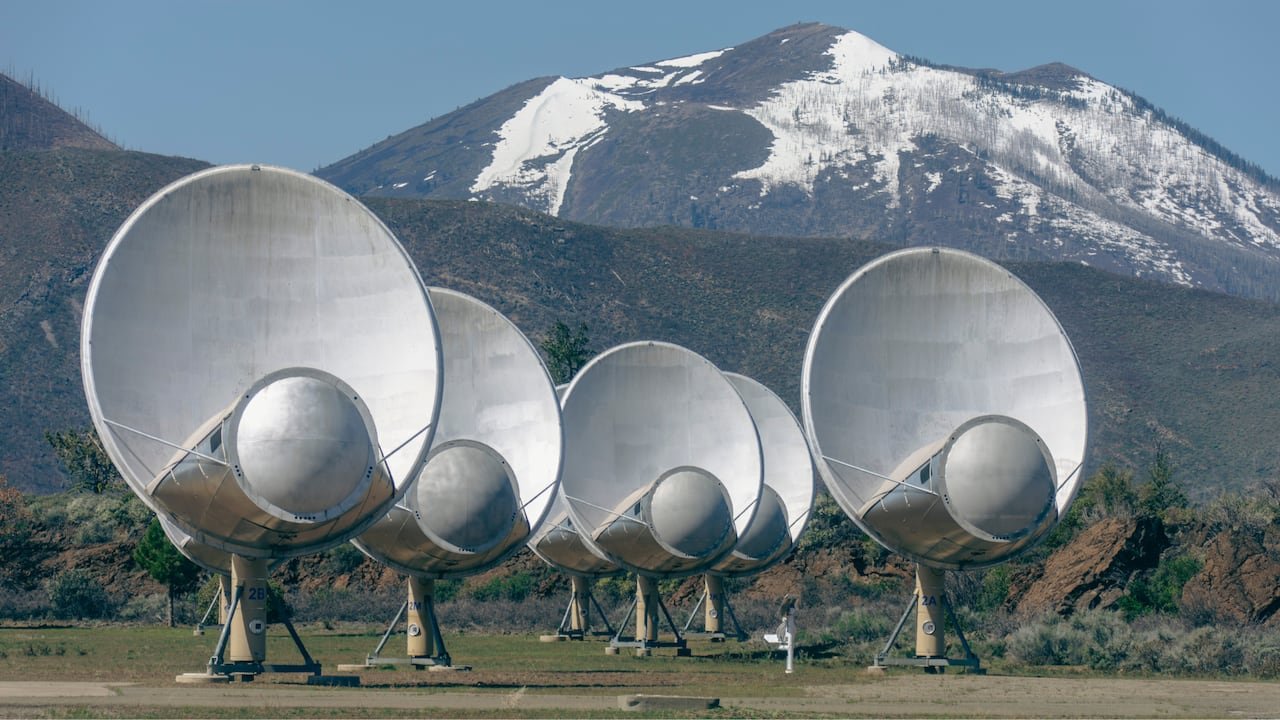
Distinct from the typical space phenomena like black hole activity or solar winds, these technosignatures would exhibit structured patterns suggesting artificial origins, akin to Earth’s intentional radio and television broadcasts beaming into space.
A recent study published in The Astrophysical Journal highlights a potential challenge in this pursuit: interferences caused by space weather from stars, where potential alien signals may originate.
For decades, scientists have focused on narrowband signals, which are highly concentrated beams of energy at singular frequencies that deviate from typical astrophysical phenomena, potentially hinting at transmissions from intelligent extraterrestrial life forms.
Lead author Vishal Gajjar, a staff astronomer at the SETI Institute, emphasizes the uniqueness of narrowband signals and their rarity in natural astrophysical processes, especially when recurrent detections suggest a possible alien origin.

Reassessing the Search for Extraterrestrial Signals
Despite extensive efforts, scientists have mostly encountered silence in their pursuit of alien signals, prompting a reevaluation of how stars’ properties, around which planets orbit, might obscure these signals.
According to Gajjar, every star, including the sun, is encompassed by an interplanetary medium consisting of plasma and magnetic fields influenced by stellar activities like winds, flares, and occasional disruptive eruptions.
- <li class="similarListItem
