
Sooren Moosavy is on the lookout for an inexpensive electric vehicle in the United States, driven by environmental consciousness and a preference for the smooth performance of EVs. However, the 28-year-old resident of Baltimore is facing a challenge as the cars that have caught his interest are from Chinese automakers and are essentially unavailable in the American market.
“I would be thrilled to have the chance to purchase or even test drive one,” expressed Moosavy, who has narrowed down his choices to three models from BYD, Geely, and Zeekr due to their compact design, luxurious interiors, and most importantly, their affordability.
Moosavy is not the only one in this predicament. With the average price of new cars in the U.S. nearing $50,000, more consumers are considering purchasing lower-priced Chinese vehicles, despite opposition from the industry and major U.S. political factions.
While Chinese electric vehicles are making waves in Europe, Latin America, and even Canada, they are facing significant barriers in the U.S. market due to tariffs exceeding 100%, citing concerns over data security and safeguarding American jobs.
In regions like Europe, several Chinese EVs are available for under $30,000 and come equipped with features like advanced driving assistance systems, a built-in mini fridge, and even the option to enjoy karaoke with fellow passengers.
“The technology they offer at these lower price points is remarkable,” stated Clint Simone, senior features editor at the car-shopping platform Edmunds, who had the opportunity to test drive various Chinese vehicles at the CES trade show earlier this year.
China’s Growing Export Dominance
China has surpassed Japan in recent years to become the leading global exporter of vehicles.
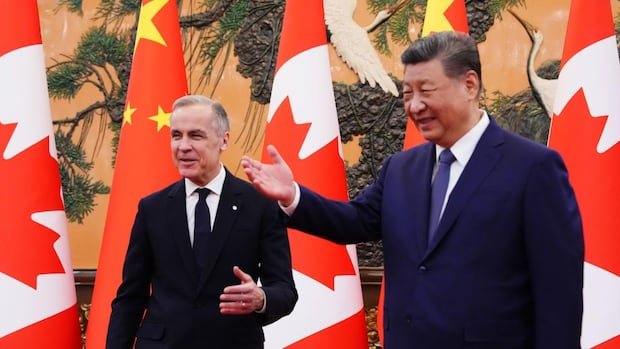
Canada recently joined the list of countries embracing Chinese cars by reducing tariffs to 6.1% on an initial quota of 49,000 Chinese EVs annually.
These cars are already being exported in large numbers to Mexico, where Chinese automakers are eyeing opportunities for establishing manufacturing facilities.
U.S. President Donald Trump has expressed openness to Chinese automakers setting up operations in the country as long as they employ American workers. However, major auto trade groups recently urged the U.S. government to block Chinese carmakers from entering the market, citing concerns about competitiveness.
